Bulkhead Construction Guide for Coastal Projects with Costs, Materials, and Shoreline Protection
Owning waterfront property in Texas is one thing. Keeping it intact is another.
Most people don’t start thinking seriously about bulkhead construction until something visibly changes at the water’s edge: a chunk of bank that wasn’t there last year, a fence post that’s now leaning toward the water, or a neighbour’s wall that just gave out after a rough storm season. By that point, the erosion has usually been working quietly for longer than anyone noticed.
This guide is for property owners who want to understand what they’re dealing with before they make any calls. What bulkheads actually do, what goes into building one, what it’s likely to cost, and how to read the early signs that a repair or replacement is coming.
What a Bulkhead Is Actually Doing at Your Shoreline
Think of a bulkhead as the thing standing between your property and the water’s slow, patient attempt to take it back.
It’s a retaining wall built right at the waterline. On one side, you’ve got soil, everything your property sits on. On the other side, water that rises, falls, pushes, and pulls with every tide and every wake. The bulkhead holds that boundary.
Without it, erosion takes over, gradually at first, then faster, and usually at the worst possible time.
Materials Matter More Than Most People Think
The material a bulkhead is built from determines how long it lasts, how much maintenance it needs, and how well it holds up to the specific conditions on your stretch of water. There’s no single right answer, but there are better and worse fits depending on the site.
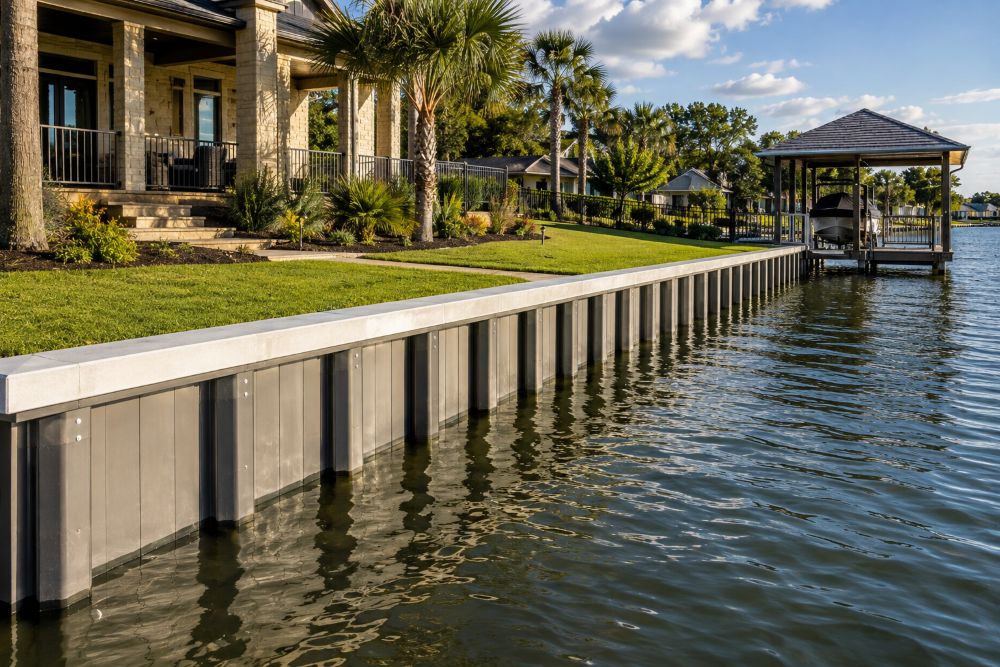
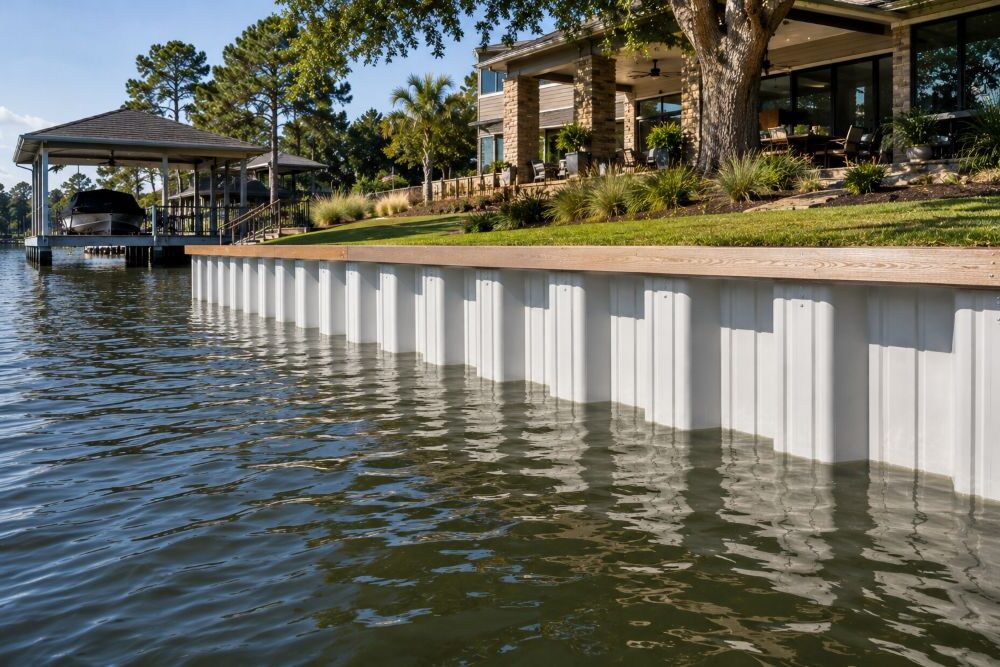
Vinyl sheet piling is what most residential waterfront projects in Texas use today, and for good reason. It doesn’t rot, doesn’t rust, and handles saltwater and coastal humidity without the ongoing maintenance that other materials demand. The lifespan is solid—decades, not years—and the installation process is reasonably simple compared to heavier alternatives.
Steel sheet piling is the choice when load and wave pressure move beyond what vinyl is built for. Commercial jobs, high-energy shorelines, situations where the forces at play are simply heavier. The tradeoff is corrosion in saltwater environments, which means more attention over time.
Timber still shows up on older properties along the Gulf Coast. Treated wood holds up well enough, but marine borers in coastal Texas waters are a real problem, and the lifespan just doesn’t compare to vinyl or steel. Most people replacing an old timber bulkhead don’t go back to wood.
Concrete comes into the picture when the project crosses into seawall territory or when site conditions demand something with exceptional strength. It’s not the default for standard residential work.
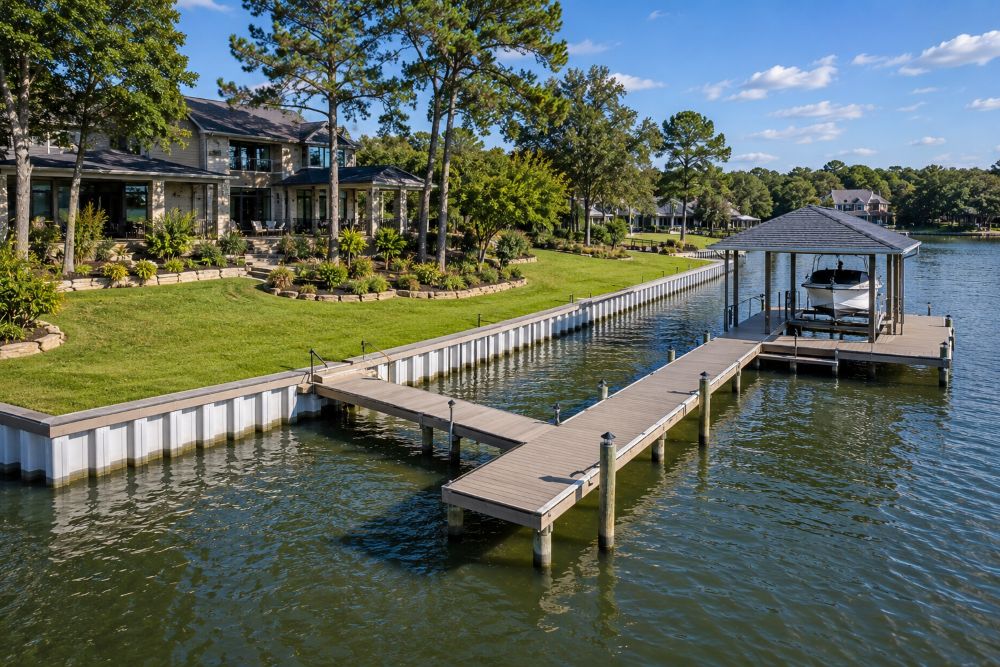
For most homeowners on the Texas Gulf Coast, vinyl is the practical answer. It handles the conditions here, doesn’t demand constant upkeep, and sits at a price point that makes sense for residential-scale projects.
Get trusted bulkhead construction services before small erosion turns into costly repairs.
What Bulkhead Construction Actually Costs
Bulkhead construction cost depends heavily on site conditions, so no single number fits every project.
For new residential bulkhead construction in Texas coastal areas, costs usually range from $150 to $500 per linear foot. Calm-water sites with easy access and stable soil stay on the lower end, while exposed shorelines, difficult access, deeper water, and poor soil conditions increase costs quickly.
Pile bulkheads cost more than standard sheet pile walls, but the added strength is often necessary for high-energy shorelines. Permits also add to the budget, and working with experienced bulkhead builders helps avoid costly delays and mistakes.
What Your Existing Bulkhead Is Trying to Tell You
Bulkhead failures usually show warning signs before the wall gives out completely.
Bowing or leaning toward the water is one of the clearest signs that pressure behind the wall is increasing. Cracks, gaps, soil appearing on the water side, and sinkholes or soft spots behind the wall should also be taken seriously.
Early bulkhead repair is far less expensive than a full replacement. A small issue that costs a few thousand dollars today can turn into a major rebuild if left too long. Water damage only gets worse with time.
Site Conditions Drive the Design
There’s no standard bulkhead that works everywhere, and anyone quoting a project without looking at the site first isn’t giving you a real number.
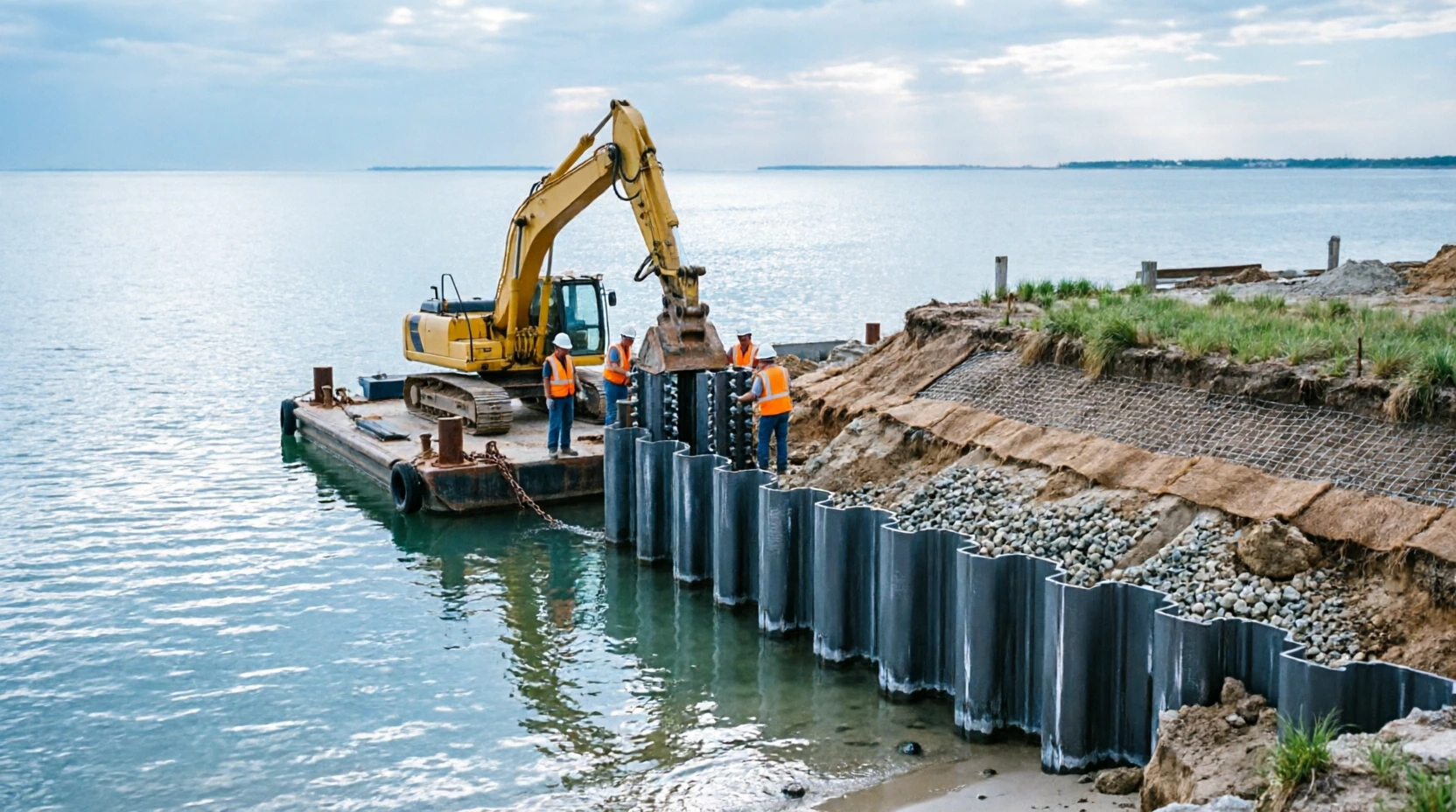
A property on a protected cove faces different conditions than one sitting on open bay water. Tidal range, boat traffic nearby, soil type behind the wall, existing vegetation along the bank—all of these factors go into what bulkhead construction services make sense for that specific location.
Some sites benefit from a combination of a hard structure handling the direct wave load and natural elements like vegetation or oyster substrate filling in where the conditions allow for it.
This is why a site visit from someone who actually works in these waters regularly is worth more than any general estimate or online calculator. Local experience in coastal construction isn’t a marketing line; it’s what the difference between a 30-year wall and a 10-year wall is usually made of.
Conclusion
Shoreline erosion doesn’t announce itself. It just keeps going until the damage is obvious, and by then the options are more limited and more expensive than they would have been earlier.
Dream Boat Docks has been doing marine construction along the Texas Gulf Coast since 1987. New builds, repairs, or just trying to figure out what you’re looking at on your property, the team offers free estimates and can walk you through what the site actually calls for without pressure or guesswork.
Bulkhead Construction Frequently Asked Questions
1. How long does a waterfront bulkhead typically last?
Material is the biggest factor. Vinyl bulkheads hold up for 25 to 50 years in coastal conditions when installed correctly. Steel and concrete can last longer with proper upkeep. Timber has the shortest lifespan in saltwater environments, marine borers and rot work faster than most property owners expect. Dream Boat Docks can inspect an existing structure and give you an honest assessment of where it actually stands and what, if anything, needs to happen next.
2. Can an existing bulkhead be reinforced instead of replaced?
Yes, it happens frequently. The wall shows initial signs of damage through some bowing and minor separation, but its core structure remains intact, thus requiring tie-backs, deadmen anchors, and sister pilings as reinforcement methods, which will extend its lifespan. The solution requires more than complete replacement because practical on-site evaluations determine whether a $5,000 repair will suffice or a $50,000 reconstruction is needed.
3. When does a site need a bulkhead rather than a living shoreline?
Living shorelines that use natural vegetation and oyster reef substrate solutions perform effectively in regions that experience low-energy conditions and protected water with slight wave movement. The location requires solid construction when it experiences high wave activities from boat wakes, tidal movements, and active erosion pressures.
Some properties use both, which allows the bulkhead to handle direct loads while natural elements provide additional support in areas with lower energy levels. The choice depends on the existing conditions at the site instead of personal preferences.
4. What causes bulkheads to fail before they should?
Poor installation and undersized materials are the obvious ones. The less obvious one is drainage, specifically, the lack of it. When water builds up in the soil behind a bulkhead with nowhere to go, the hydrostatic pressure against the wall multiplies. It’s responsible for more premature failures than most people realise, and it’s something experienced bulkhead builders design around from the start rather than patch after the fact.
5. Do I need a permit for bulkhead repair near me in Texas?
Most waterfront construction in Texas requires permits and repairs, depending on the specific waterway and local jurisdiction. The procedure becomes complicated for first-time users, while contractors who work in your coastal region handle the process with ease. Getting the permit question sorted before work begins matters more than most people think; mid-project delays because of missing approvals are avoidable and expensive.