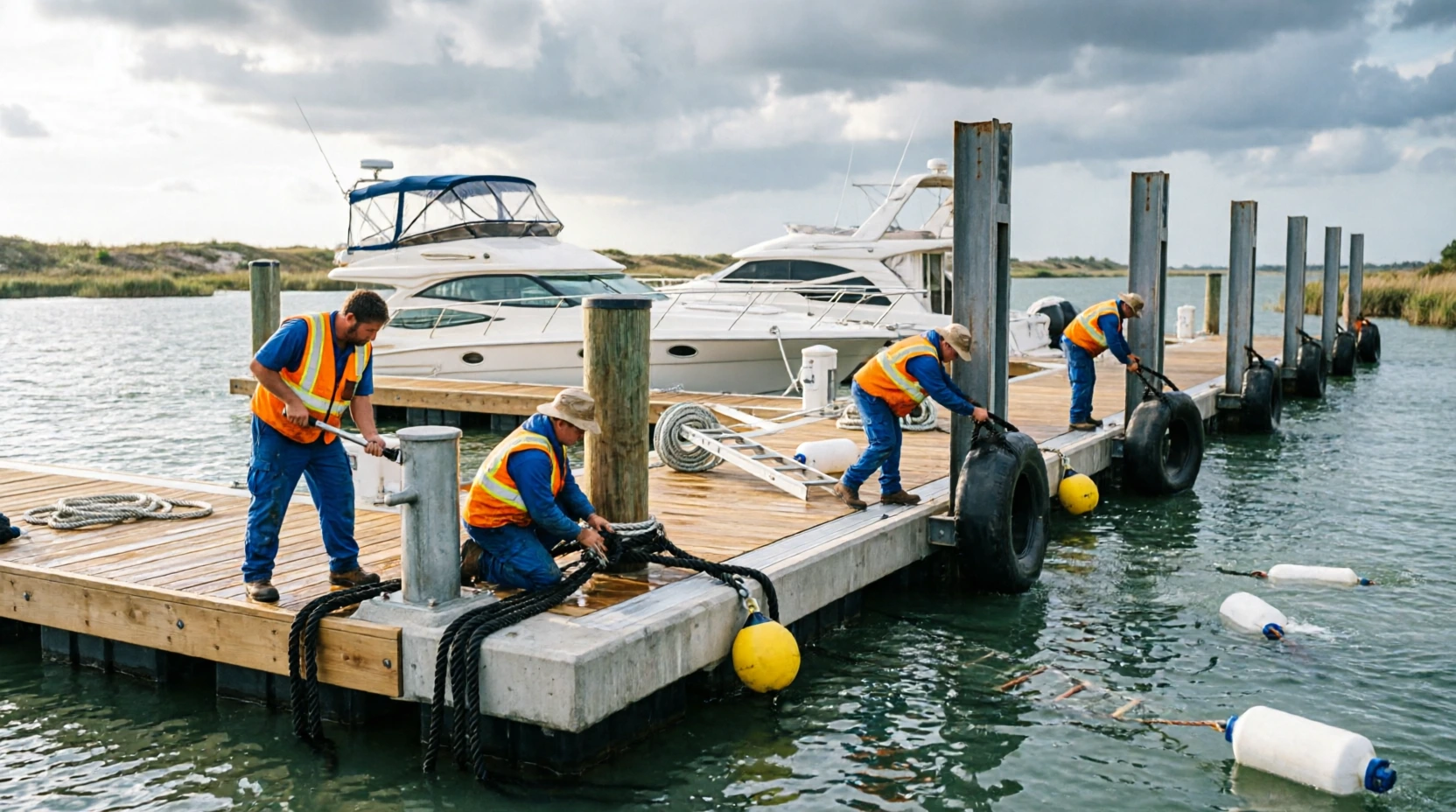
Prime boating season is nearly here! The excitement is building, but take a pause. Your dock has just survived another winter of fluctuating temperatures and damp conditions.
Before you load the cooler and uncover the boat, it is essential to perform a “Spring Health Check.” Taking an hour to inspect your structure now can prevent costly mid-summer repairs. More importantly, it keeps your family safe.
Why is a spring inspection so necessary for Houston dock owners?
In the Houston area, our docks don’t deal with heavy ice, but they do deal with “The Big Thaw,” the shift from damp, chilly winters to intense UV exposure and heavy spring rains.
This transition can cause wood to contract and expand, loosening hardware and exposing vulnerabilities in your protective coatings.
A spring checkup ensures that minor issues like a loose bolt or a small patch of wood rot don’t turn into structural failures during a summer storm.
How can I tell if my bulkheads or pilings are showing signs of stress?
The foundation of your waterfront property is where you should start.
Walk the length of your bulkhead and look for “sinkholes” or depressions in the soil behind the wall. These are often the first signs that your bulkhead is leaking soil into the water, which is a common issue after heavy spring downpours.
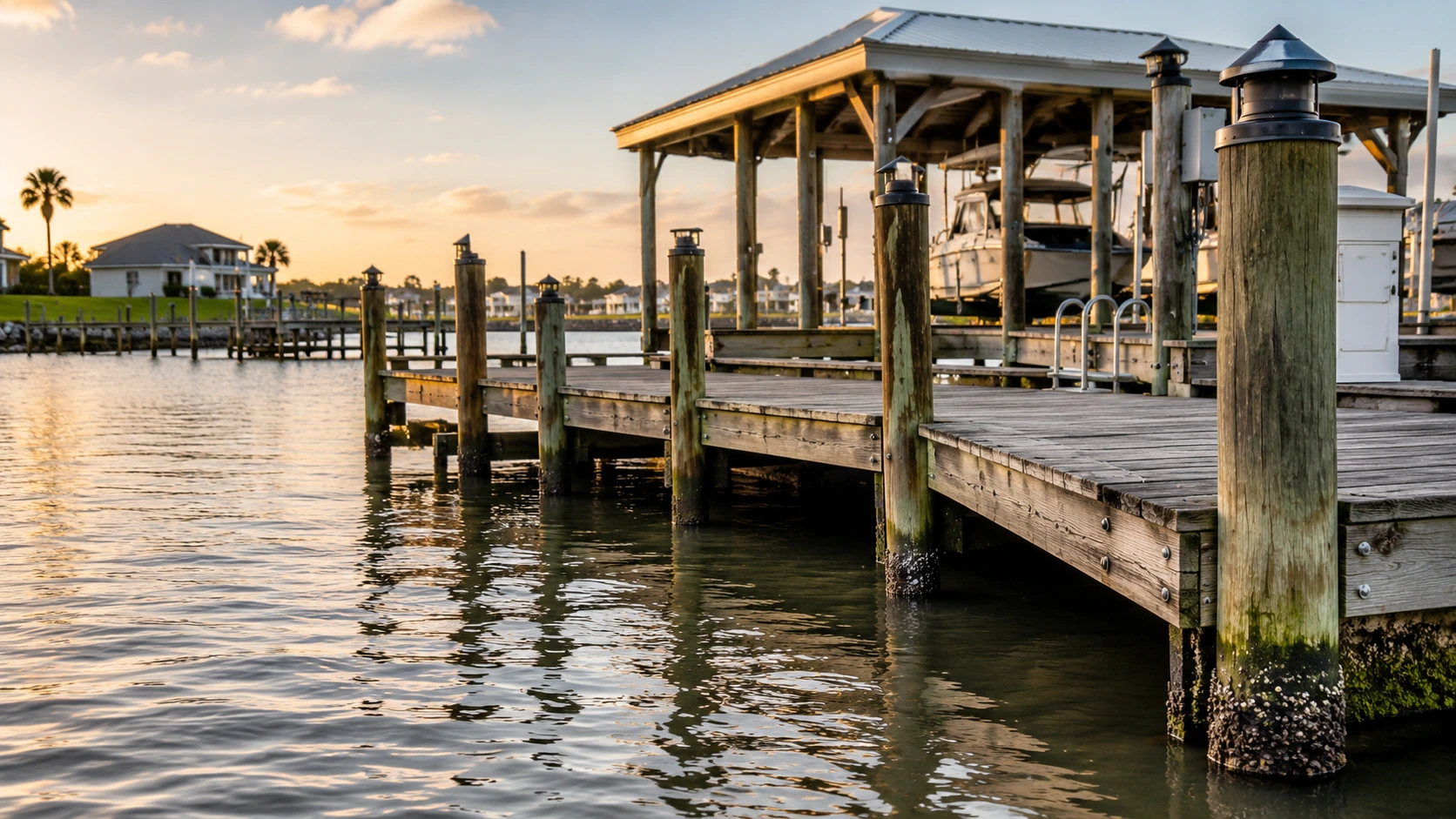
Next, look at your pilings at the waterline. Are there tiny holes in the wood? You may have marine borers.
Do you see places where the wood has worn thin?
If your pilings are leaning or showing signs of decay, the structural integrity of your whole boathouse could be at risk.
Is your boat lift hardware secure and lubricated?
Your boat lift is a mechanical workhorse, but it requires maintenance to stay reliable. Check your cables for “meat hooks” (frayed strands) or signs of rust.
Even galvanized steel has a lifespan, especially on the coast.
Are the pulleys turning freely? Do they squeak under pressure? Apply a fresh coat of marine-grade grease to the gears and ensure the motor covers are intact.
It’s much easier to replace a frayed cable in March than it is to deal with a snapped one in July.
How safe is my dock?
Safety starts underfoot. Inspect your decking for popped nails, splinters, or boards that feel “spongy.” Houston’s high humidity is a breeding ground for algae, which can make wood surfaces incredibly slick.
A good power-wash followed by a fresh seal can prevent slips while extending the lifespan of your deck. If you notice persistent rot, it might be time to consider a transition to composite or vinyl decking, which stands up far better to the Texas sun.
When should you call in the professionals at DreamBoat Docks?
While a visual DIY inspection is a great start, some issues can be hidden beneath the water or inside the electrical conduit.
If you notice significant swaying in your boathouse, large cracks in your concrete bulkhead, or a lift that’s struggling to pull its weight, it’s time to get a professional evaluation.
Contact DreamBoat docks to get started today!