Spring is officially here. The humidity is rising. The days are getting longer. And you’re probably really ready to get out on that water!
But as we gear up for a season of sun and fun, we must also acknowledge the other occupants of the Gulf Coast: pests. Relentless ones.
Warm, brackish water and high humidity makes Houston a paradise for creatures that view your beautiful dock as their next meal or home. Left unchecked, these silent saboteurs can turn a stunning boathouse into a structural liability.
At Dream Boat Docks, we know building the perfect waterfront escape is only half the battle.
Protecting it is the other. So as we head into April and May, here’s what you need to know about keeping bugs, brine, and barnacles at bay.
What is eating your dock from the inside out?
Subterranean termites love moisture, and a wooden bulkhead is a perfect highway that leads directly into your property.
And then there’s marine borers, often called the “termites of the sea.” These are the crustaceans and mollusks that burrow deep into untreated or poorly treated wood pilings, hollowing them out until the structure beneath becomes brittle, and fails.
To prevent this, ensure your dock is constructed using high-quality marine-grade lumber, pressure-treated specifically for salt or brackish water immersion.
Superficial coats of sealant won’t be enough.
How does the Gulf Coast climate accelerate decay?
Salt-heavy air and water combine to create corrosion. Humidity acts as an accelerant.
All three work together to break down the natural protective fibers in wood, making it soft and waterlogged. This softened wood isn’t just structurally weak; it’s an open invitation to fungi, rot, and insects.
The saltwater environment also corrodes standard construction fasteners.
This is why at Dream Boat Docks we use stainless steel hardware and hot-dipped galvanized steel components in our construction, ensuring your dock’s skeleton remains strong even as the elements attack the skin.g a boat and start thinking about how the whole waterfront experience should work.
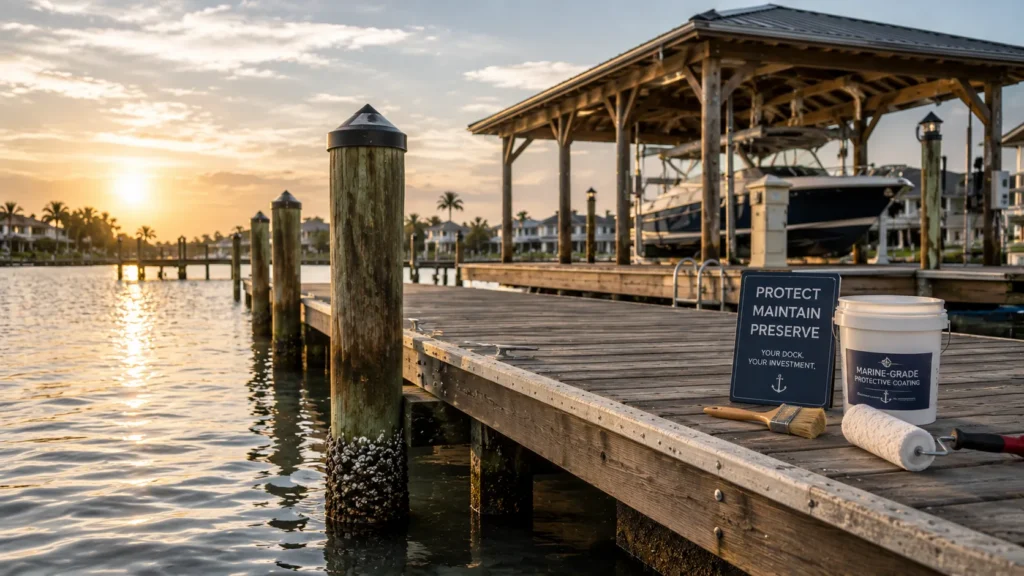
Are barnacles and marine growth more than an eyesore?
Barnacles, algae, and oysters are less cosmetic than they seem. They can interfere with your boat lift, making it difficult to center your vessel. Over weeks and months, the abrasive surfaces of hard-shelled marine life can scrape the anti-fouling paint or gelcoat off your boat hull.
Furthermore, a heavy, encrusted piling restricts water flow, increases drag, and can add a lot of stress to the overall structure.
While it’s an ongoing battle, maintenance is the best defense. Regularly scrape submerged pilings during peak spring and summer growing seasons. This will prevent heavy accumulation, and protect your dock and your boat.
How else can I protect my dock?
Start your build with the most resilient materials if you’re building new. Call us for repairs and maintenance if you’re not. Your dock should be an investment that lasts a lifetime. We’re here to help.
FAQs
What pests are most damaging to docks on the Gulf Coast?
The biggest threats are often the ones you don’t notice right away. Subterranean termites can move through damp wood structures, while marine borers (sometimes called “sea termites”) quietly tunnel into submerged pilings. Over time, both can weaken your dock from the inside out, turning solid wood into a hollow shell if left untreated.
How does the Gulf Coast climate affect dock structures?
The combination of salt-heavy air, high humidity, and warm water creates the perfect environment for accelerated decay. Wood absorbs moisture faster, loses its natural strength, and becomes more vulnerable to rot and fungal growth. At the same time, salt corrosion aggressively attacks standard metal fasteners, which is why marine-grade materials are essential for long-term durability.
Are barnacles and marine growth actually harmful to my dock?
Yes, and not just visually. Barnacles, algae, and oysters can interfere with boat lifts, make docking more difficult, and create uneven pressure on pilings. Over time, heavy marine growth adds weight, increases drag in the water, and can scratch or damage boat hulls when contact occurs. Regular cleaning during peak growth seasons helps prevent long-term issues.
What materials help protect a dock from pests and corrosion?
Durability starts with the right build. Marine-grade, pressure-treated lumber designed for salt or brackish water performs significantly better than standard wood. Stainless steel or hot-dipped galvanized hardware is also essential to resist corrosion. These materials work together to slow decay and reduce vulnerability to both pests and environmental damage.