For waterfront properties in Houston and Galveston, a bulkhead is more than an aesthetic. It’s the first line of defense against erosion, tidal damage, and storm surges.
Choosing the right material dictates the lifespan, maintenance needs, and ultimate cost of this critical barrier.
Here at Dream Boat Docks, we typically use three bulkhead materials to get best results: treated timber, PVC, and steel. We match them to your property’s needs and budget to ensure you get the bulkhead that works best for you.
What are the pros and cons of pressure-treated timber?
Pressure-treated lumber is the traditional and most common option for a bulkhead.
Pros:
- A gorgeous, natural look
- Lowest initial installation cost
- Easy to repair or replace
Cons:
- Shorter lifespan (15 – 25 years)
- Vulnerable to wood borers
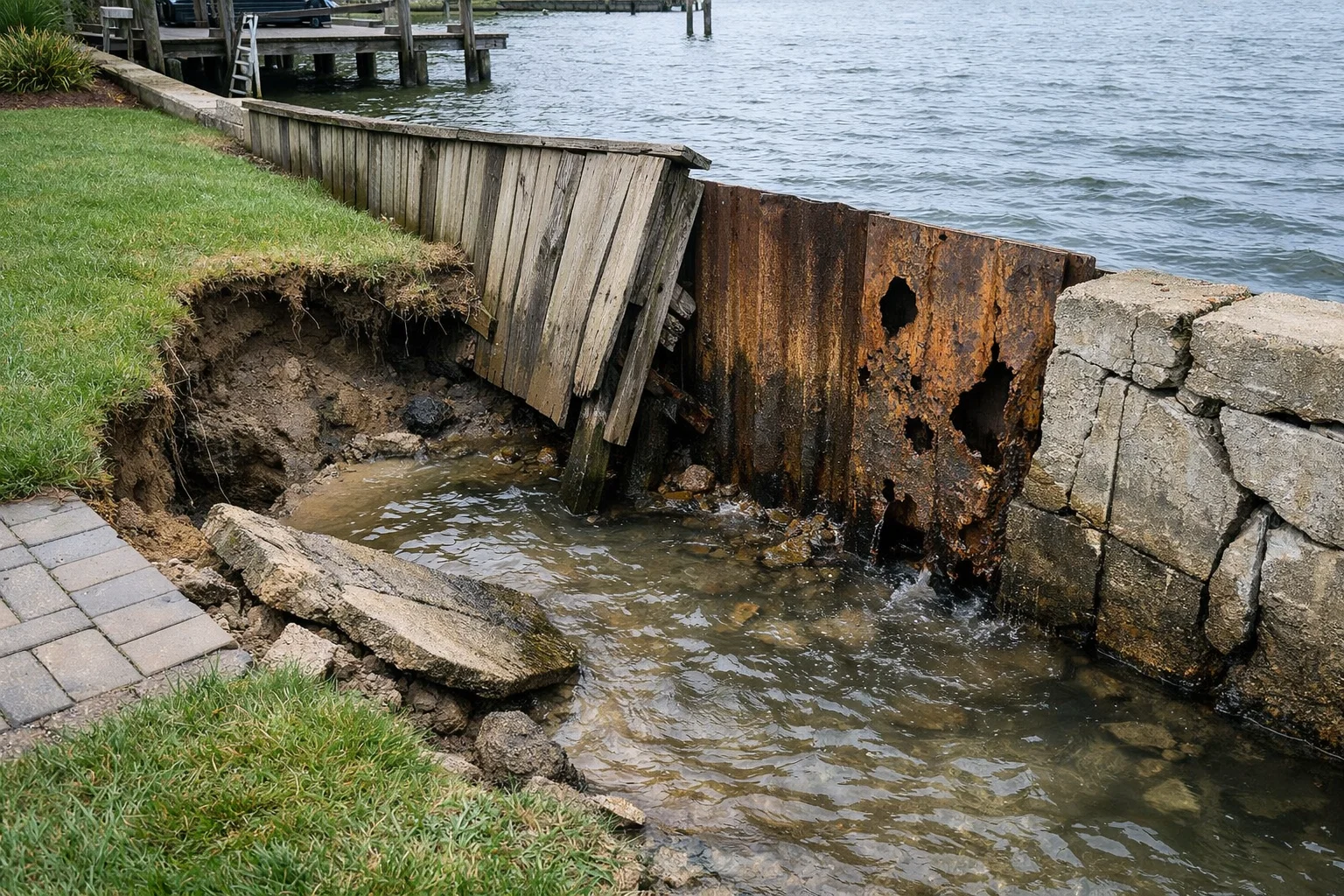
- Vulnerable to rot, requires regular inspections
Best for:
- Tight budgets
- Those who value traditional aesthetics
- Low-energy shorelines
What are the pros and cons of PVC?
PVC sheet piling is a modern, low-maintenance choice.
Pros:
- 50+ year lifespan
- Immune to rot, rust, borers, corrosion
- Low maintenance
- Many colors available
Cons:
- Higher up-front costs than timber
- Contractor choice matters—poor installation can lead to premature failure
Best for:
- Homeowners who expect to be in the property for decades
- Homeowners with busy schedules
- Low-energy to moderate-energy shorelines
What are the pros and cons of steel and concrete?
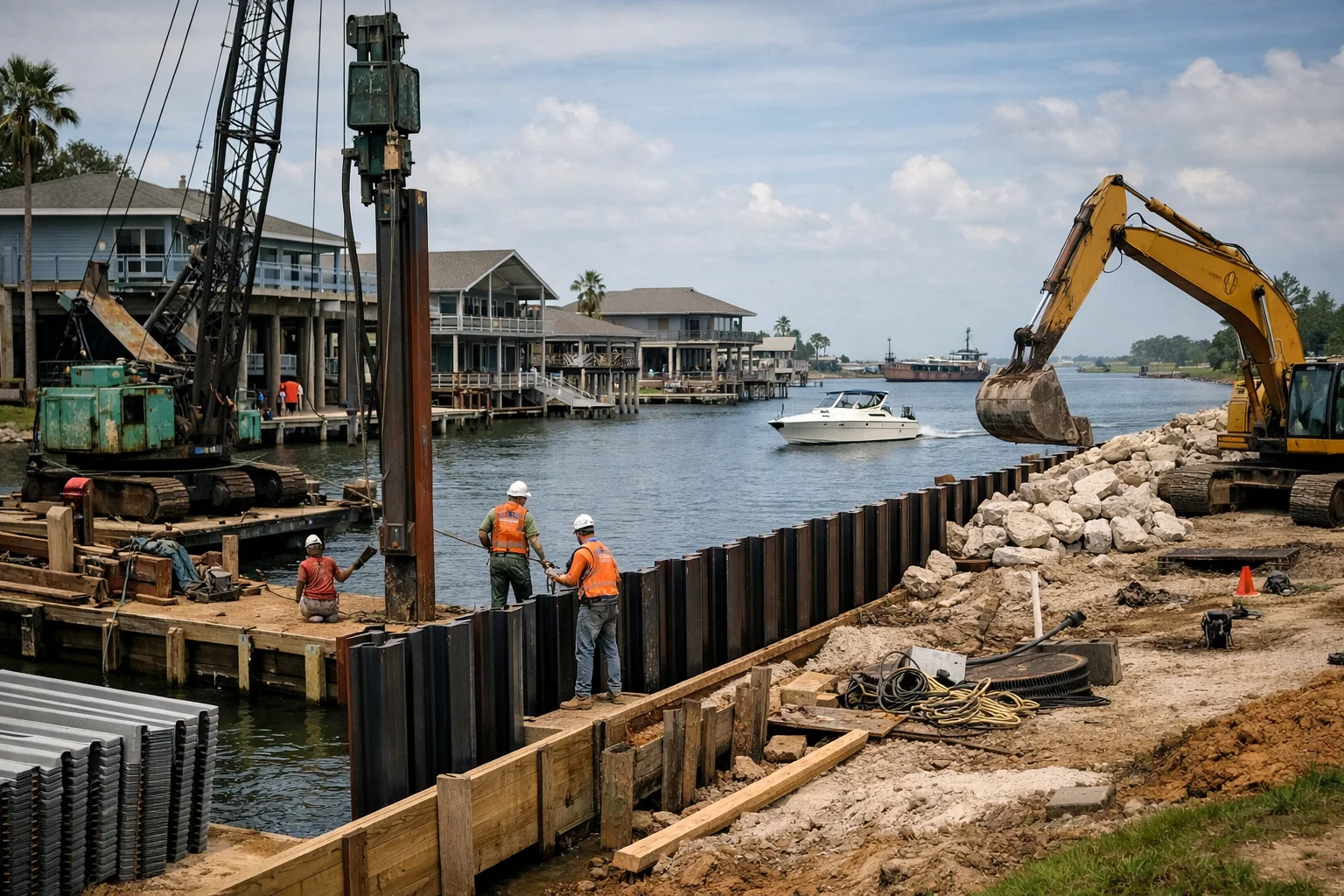
Steel and concrete is a heavy-duty, commercial grade option, though some homeowners still opt for this bulkhead build.
Pros:
- 50+ year lifespan
- Unmatched durability
- Maximum protection against hurricane-force storm surges
- Extreme structural integrity
Cons:
- Highest cost
- Looks “industrial” instead of beautiful
- Complex permitting
- Requires regular coatings and maintenance to prevent rust
Best for:
- Commercial docks and marinas
- High-energy shorelines on the main bay or open coast
Frequently Asked Questions
How long does a bulkhead last in the Houston area?
Lifespan depends on the material, the quality of the installation and the shoreline it protects. As a general guide, pressure-treated timber bulkheads often last around 15 to 25 years, while well-installed vinyl (PVC), steel and concrete systems can last 50 years or more. Wave energy, boat wakes, saltwater exposure and regular maintenance all affect how long any bulkhead actually lasts.
Is vinyl or wood better for a bulkhead on Galveston Bay or Clear Lake?
It depends on the exposure. Vinyl resists rot, marine borers and corrosion, which makes it a strong long-term choice in brackish and salt water. Timber costs less up front and is easier to repair, but borers and rot shorten its life in salt water. Shorelines with heavy wave action may call for steel or concrete. A site evaluation is the best way to decide.
Does salt water or fresh water change which bulkhead material I should use?
Yes. In saltwater and brackish areas such as Galveston Bay, Clear Lake and Kemah, timber faces marine borers and steel needs protective coatings to slow corrosion. On freshwater lakes like Lake Conroe and Lake Houston, timber generally lasts longer, although changing water levels and boat wakes still matter. Vinyl and composite sheet piling hold up well in both environments.
Can a new bulkhead be built in front of an old one?
Sometimes. In some cases a new wall can be installed just in front of a failing bulkhead, which avoids tearing out the old structure. Whether that is allowed or practical depends on the condition of the existing wall, the water depth, property lines and local permitting rules. A contractor should inspect the site before recommending this approach.
What's the right bulkhead material for my shoreline?
Don’t guess. Get professional advice. Dream Boat Docks specializes in assessing your property’s specific conditions, including shoreline activity, bed conditions, and exposure. We’ll then recommend a solution that offers the best balance between longevity and cost. We’ll also take your needs and schedule into account.
Ready to install a resilient, custom bulkhead solution? Contact us today for a site evaluation and personalized quote.