Your bulkhead silently protects your property from erosion, boat wakes, and tidal forces. It’s not glamorous, but it’s an important asset on any waterfront property.
And if it fails, the results are often catastrophic. Rapid, extensive land loss can follow any bulkhead failure. It’s vital to know the signs of impending collapse, and to seek repairs before they happen.
What are the major signs of bulkhead failure?
You’ll start to see the following signs on the property, dock, or water’s edge.
- Sinkholes in the yard near the water.
- Parts of the wall are leaning, bowing, or separating.
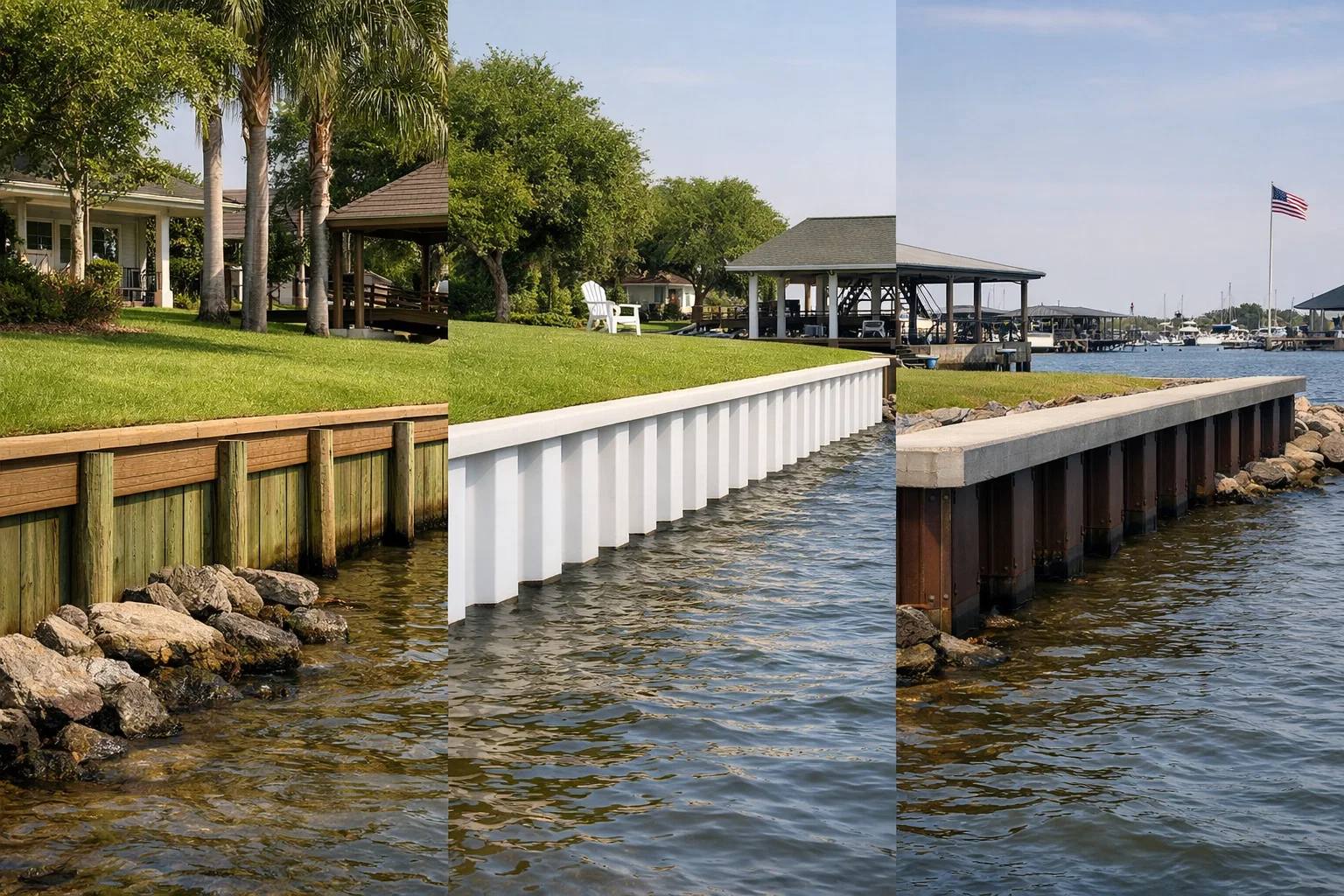
- Wooden bulkheads may splinter or begin displaying small, wormlike holes.
- Steel or concrete bulkheads may begin to rust or pit.
- You may also see wide, jagged cracks that allow water to seep through.
What are the major signs of bulkhead failure?
What are the major signs of bulkhead failure?
What happens when total collapse occurs?
Total collapse is almost always more expensive than replacing early. When you wait for a total collapse, you must pay both for the replacement structure and for the costs of new backfill. Replacing yards of lost land is not cheap, and can make the entire project 50% more expensive. Insurance will rarely cover the loss.
Frequently Asked Questions
Can a failing bulkhead be repaired instead of replaced?
Sometimes. Localized problems, such as a small section of damaged boards, minor soil loss or a failed tie-back, can often be repaired. Widespread leaning, extensive rot or corrosion and repeated sinkholes usually mean the wall has reached the end of its life. A professional inspection will tell you which situation you are in before the damage spreads.
How long does a bulkhead replacement take?
Timelines vary with the length of the wall, the materials, site access and the permits required. Construction on a typical residential lot is often measured in days to a few weeks, but permitting and material lead times can add time before work starts. Planning early helps you avoid replacing a wall in the middle of storm season.
How often should a bulkhead be inspected?
A visual check at least once a year is a good habit, along with an inspection after any major storm, high-water event or hurricane. Look for leaning, gaps between boards or panels, soil loss behind the wall, sinkholes and rust on hardware. Catching small problems early is far less expensive than dealing with a collapse.
Does homeowners insurance cover bulkhead failure?
Coverage varies by policy, but standard homeowners policies often exclude erosion, gradual deterioration and flood-related damage, which are the most common causes of bulkhead failure. Review your policy and talk with your insurance agent before an emergency happens, so you know what is and is not covered.
What should you do if you think you need to replace your bulkhead?
Call DreamBoat Docks! We’ll give you a firm quote on a bulkhead replacement and will help you build a long-lasting bulkhead that you won’t have to think about for years and years.
Don’t guess when it comes to the safety of your property line. Know for sure. Contact us to schedule an estimate today.