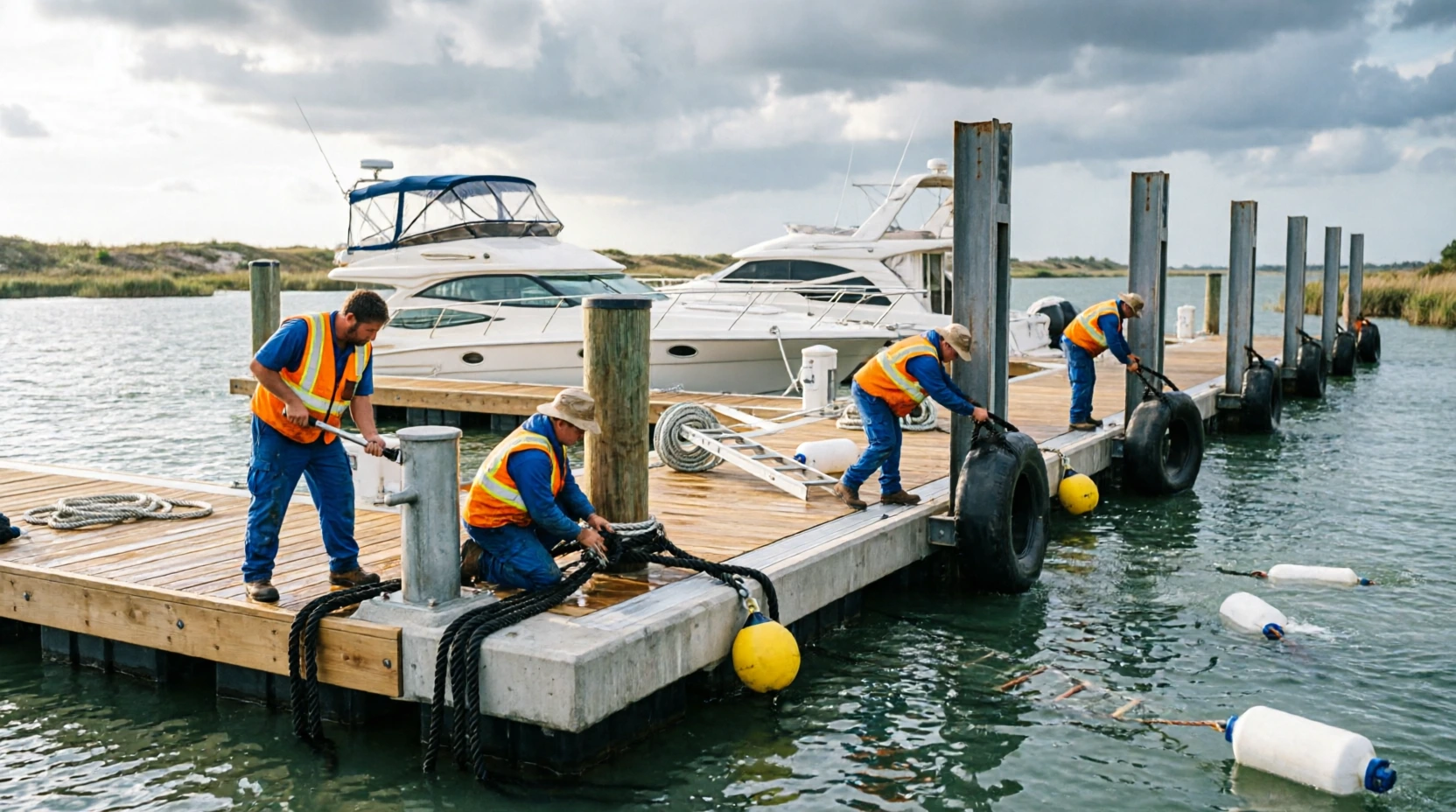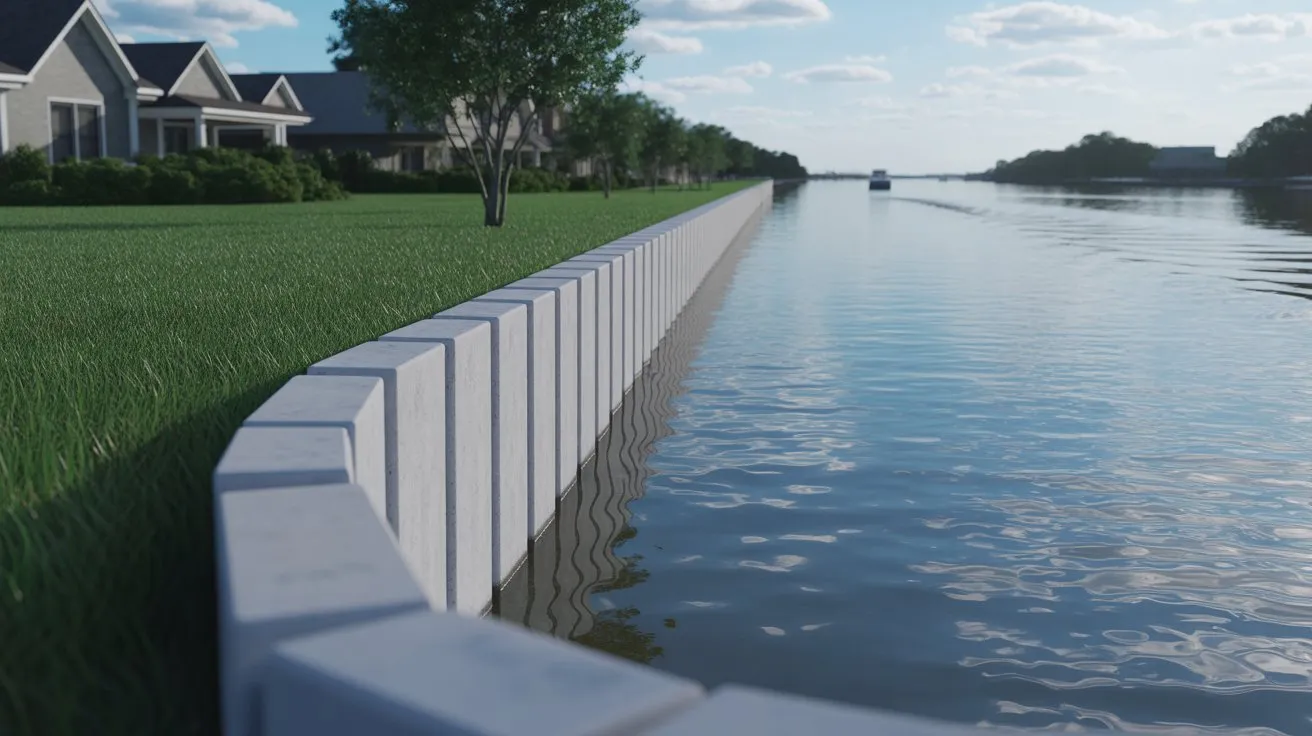
A custom dock can be much more than a place to tie up a boat.
For Baytown waterfront homeowners, the right design can create convenient boat access, shaded seating, fishing space, storage, lighting, a boat lift, and an outdoor area that feels connected to the home.
At the same time, Baytown’s waterfront conditions require more planning than a basic backyard deck.
Properties around Upper Galveston Bay, Tabbs Bay, Burnet Bay, canals, and nearby estuaries may be exposed to brackish water, tidal movement, coastal weather, corrosion, and varying levels of wave or vessel-wake activity.
That means a successful custom boat dock design in Baytown needs to balance lifestyle, appearance, access, maintenance, and site-specific structural requirements.
Dream Boat Docks has served Texas waterfront property owners since 1987 and provides Baytown dock construction, boat houses, boat lifts, bulkheads, and waterfront repairs throughout the area.
This guide explains what to consider when planning a custom Baytown dock and how to create a waterfront space that works for both boating and everyday use.
Key Takeaways
- Baytown waterfront conditions vary by property, so dock design should account for water depth, shoreline conditions, wave exposure, and intended use.
- Fixed, floating, and hybrid docks can all be appropriate depending on the site.
- Pressure-treated wood and composite decking each offer different advantages.
- Pilings, framing, hardware, and foundation design are just as important as the visible deck surface.
- Boat lifts and boat houses should be planned with the dock rather than added as an afterthought.
- Bulkheads and docks serve different purposes but often need to be coordinated at the shoreline.
- Local, state, and federal permit requirements depend on the exact property and scope of work.
Start With How You Want to Use the Waterfront
Before choosing materials or roof styles, think about what you actually want the dock to do.
Some homeowners primarily need convenient boat access.
Others want a larger outdoor living space for entertaining, fishing, relaxing, or spending evenings near the water.
A custom dock can potentially include:
- One or more boat slips
- A boat lift
- Personal-watercraft storage
- Fishing areas
- Cleaning stations
- Built-in seating
- Lighting
- Electrical service
- Water connections
- Storage
- Covered areas
- A boat house
- An upper deck where permitted
- Fixed or floating sections
Dream Boat Docks designs custom boat docks around the property and the owner’s priorities rather than relying on one standard layout.
The earlier those needs are identified, the easier it is to plan the foundation, utilities, lift, access, and overall footprint correctly.
Baytown Waterfront Conditions Matter
Baytown includes a mix of exposed bayside properties, canals, inlets, and more protected waterfront areas.
That means there is no single “Baytown dock design” that works everywhere.
Depending on the location, a property may need to account for:
- Brackish-water exposure
- Tidal movement
- Wind-driven waves
- Vessel-generated wakes
- Coastal storms
- Corrosion
- Soft or variable shoreline soils
- Erosion
- Existing bulkheads
- Access for construction equipment
A property on a protected canal may have very different structural and access requirements from a dock with greater exposure to Tabbs Bay or Upper Galveston Bay.
That is why the design process should begin with the site rather than the materials.
How Much Does Houston Ship Channel Traffic Matter?
Some Baytown waterfront properties may experience vessel-generated wave energy because of their location relative to commercial navigation routes and open water.
That does not mean every Baytown dock is directly exposed to heavy Houston Ship Channel wake.
Exposure depends on:
- Distance from navigation routes
- Shoreline orientation
- Water depth
- Protection from nearby land or structures
- Vessel traffic
- Local bathymetry
- Existing shoreline conditions
Where vessel wakes are a meaningful factor, the pier foundation, bracing, elevation, access, and boat-storage design should reflect that exposure.
The appropriate response is not simply “bigger pilings.”
The entire structure should be evaluated based on the conditions at that property.
Brackish Water and Material Selection
Baytown’s brackish-water environment can increase corrosion concerns compared with many inland freshwater settings.
Metal hardware, connectors, lift components, and other exposed elements should be selected with that environment in mind.
Brackish or salt-influenced water can also increase concerns about marine organisms that attack submerged timber.
Material choices therefore need to consider:
- Corrosion resistance
- Structural requirements
- Marine exposure
- Maintenance
- Material compatibility
- Budget
- Appearance
No single material is automatically best for every Baytown waterfront.
Fixed, Floating, or Hybrid Dock?
One of the first major design decisions is whether the dock should be fixed, floating, or a combination of both.
Fixed Docks
Fixed docks are supported by pilings.
They can provide:
- A stable walking surface
- Strong support for boat lifts and other features
- Permanent access
- Easy integration with covered structures
Fixed systems can work well when water-level changes and site conditions support them.
Floating Docks
Floating docks rise and fall with the water.
They may be attractive when changing water levels make maintaining a consistent boarding height important.
Floating systems still require proper anchoring and guidance and are not automatically the best option simply because the property is coastal.
Hybrid Designs
Some properties benefit from a fixed pier combined with a floating section.
This can provide a stable land-side structure while allowing the water-access portion to move with changing water levels.
For a broader comparison, see Dream Boat Docks’ guide to choosing the right dock type for your waterfront property.
Design the Foundation Before the Deck
Decking gets most of the visual attention, but the foundation determines whether the structure performs as intended.
Pilings transfer loads from the dock into the underlying soil.
Depending on the project, piling materials can include:
- Treated timber
- Steel
- Concrete
- Composite materials
- Other engineered piling systems
Dream Boat Docks provides marine piling and pile-driving services as part of its residential and commercial waterfront construction work.
How Deep Should Dock Pilings Be?
There is no universal piling depth for Baytown.
Required embedment depends on:
- Soil conditions
- Water depth
- Dock dimensions
- Piling type
- Structural loads
- Wave and wind exposure
- Boat-lift loads
- Lateral forces
- Foundation requirements
A contractor should not choose piling depth based on a generic number or simply try to drive every piling “as deep as possible.”
The foundation needs to be appropriate for the actual structure and site.
Water Jetting vs. Driven Pilings
Different piling-installation techniques can be appropriate in different conditions.
Dream Boat Docks uses marine piling methods based on the project rather than assuming one installation technique is always superior.
The right approach may depend on:
- Soil
- Piling material
- Diameter
- Water depth
- Existing structures
- Equipment access
- Required foundation capacity
This is another reason a site-specific evaluation is important before finalizing the dock design.
Pressure-Treated Wood vs. Composite Decking
Both wood and composite decking can work well on a Baytown dock.
Pressure-Treated Wood
Wood remains popular because it provides:
- Traditional waterfront appearance
- Competitive upfront cost
- Easy replacement of individual boards
- Familiar construction
Wood used around marine environments should be selected for the appropriate exposure and intended application.
Decking above the water may require different treatment specifications than submerged structural members.
Composite Decking
Composite decking can offer:
- Resistance to rot
- Resistance to splintering
- Lower routine maintenance
- Consistent appearance
- Multiple colors and finishes
Composite decking can still become hot in direct Texas sunlight, and surface temperature varies by product and color.
For Baytown docks with significant sun exposure, material selection should consider both maintenance and comfort.
Dream Boat Docks uses both wood and composite options in its custom dock construction based on the goals of the project.
What About Flow-Through Decking?
Open-grid or flow-through decking allows portions of water and air to pass through the deck surface.
Depending on the structure and exposure, this may help reduce the amount of uplift acting directly on a solid decking surface during high-water events.
However, flow-through decking should not be treated as a hurricane-proofing solution.
Whether it makes sense depends on:
- Structural design
- Deck framing
- Expected exposure
- Intended use
- Appearance
- Cost
- Local requirements
It should be evaluated as one part of the complete dock system.
Plan the Boat Lift at the Same Time
If the dock will include a boat lift, plan it early.
The lift can affect:
- Piling locations
- Slip dimensions
- Framing
- Electrical requirements
- Roof clearance
- Water depth
- Overall footprint
Lift selection should consider:
- Vessel weight
- Beam
- Hull configuration
- Lift capacity
- Future boat upgrades
Dream Boat Docks installs boat lifts for a range of vessels and can coordinate the lift with the dock rather than designing the two separately.
Keeping a vessel out of the water when it is not being used can also reduce constant hull exposure and make routine maintenance easier.
Adding a Boat House
A covered boat house can provide shade and overhead protection while creating a more substantial waterfront structure.
Depending on the design and applicable regulations, options may include:
- Single-slip layouts
- Multi-slip configurations
- Integrated boat lifts
- Storage
- Lighting
- Seating
- Fishing areas
- Upper decks
- Architectural details that complement the home
Dream Boat Docks builds custom boat houses and can coordinate the roof, lift, pilings, deck layout, and dock as one project.
Roof Design
Roof shape should be selected based on architecture, clearances, structural requirements, wind exposure, and local requirements.
Hip roofs can have aerodynamic advantages in high-wind environments, while gable roofs may provide more vertical clearance and match the architecture of certain homes.
The roof system’s performance depends on much more than shape alone.
Framing, connections, fasteners, sheathing, roofing material, and the complete load path all matter.
Can You Add an Upper Entertainment Deck?
In some locations, yes.
Where the property and applicable regulations allow, an upper deck can create more usable space without extending the structure farther into the water.
Potential uses include:
- Seating
- Dining
- Entertaining
- Fishing
- Viewing the bay
An upper deck also increases structural loads.
Foundation capacity, framing, stairs, guardrails, wind loads, and permitting should therefore be addressed during the original design rather than added casually later.
Waterfront Lighting and Utilities
Lighting can make a dock safer and more usable at night.
Options may include:
- Walkway lighting
- Overhead lighting
- Underwater lights
- Task lighting near fish-cleaning areas
- Accent lighting
Utilities can also support:
- Boat lifts
- Freshwater wash-down connections
- Outdoor sinks
- Storage areas
- Entertainment features
Any electrical system installed around water requires particular care and should be designed and installed according to applicable electrical requirements.
Qualified professionals should perform electrical work where required.
Don’t Forget the Bulkhead
A dock provides water access.
A bulkhead primarily stabilizes the shoreline and retains soil.
They serve different structural purposes, but they often need to be planned together.
Where a dock meets the shoreline, important considerations can include:
- Soil loss
- Drainage
- Erosion
- Elevation changes
- Access
- Stairs or ramps
- Bulkhead condition
- Future maintenance
If the existing shoreline wall is leaning, deteriorating, or allowing soil to escape, it is worth evaluating the bulkhead while planning the dock.
Dream Boat Docks also offers vinyl bulkhead installation and composite/FRP bulkhead construction when those materials are appropriate for the shoreline.
Designing a Dock for Entertaining
A waterfront living space should reflect how the homeowner plans to use it.
That may mean keeping the design relatively simple with a fishing platform and boat lift.
Or it may include:
- Dining space
- Built-in seating
- Shade
- Storage
- Lighting
- Fish-cleaning areas
- Multiple boat slips
- Personal-watercraft storage
- Covered seating
- Upper decks
The goal should not be to include every available feature.
It should be to create a layout that feels comfortable and functional without making boating access difficult.
Dream Boat Docks’ construction and remodeling services can also be used to upgrade an existing waterfront structure rather than starting from scratch.
Baytown Dock Permitting: What Property Owners Should Know
Waterfront permitting can involve more than one authority.
Exactly which approvals apply depends on the location of the property and the scope of the project.
City of Baytown
The City of Baytown processes building and development permits through its Planning and Development Services department and Citizen Self Service portal.
Local requirements should be confirmed early in the planning process, particularly when the project involves structural construction, utilities, floodplain considerations, or other regulated work.
Texas General Land Office
Some residential structures extending over state-owned submerged land can require authorization through the Texas General Land Office.
Qualifying single-family residential structures may be eligible for the GLO’s Structure Registration process.
The GLO notes that qualifying registrations can cover residential piers and associated features such as boat lifts, landings, and fish-cleaning tables.
U.S. Army Corps of Engineers
Federal authorization can also apply to certain work in navigable or regulated waters.
The U.S. Army Corps of Engineers Galveston District currently has a 2026–2031 Pier Regional General Permit that can authorize qualifying construction, repair, maintenance, modification, and replacement of certain single pile-supported piers.
That does not mean every Baytown dock automatically qualifies.
The exact property and proposed work determine whether local, state, federal, or multiple approvals are required.
A contractor familiar with waterfront permitting can help identify the applicable agencies early enough that permit requirements do not become a last-minute surprise.
How Long Does the Design and Construction Process Take?
There is no standard timeline for every Baytown dock.
Project duration can depend on:
- Design complexity
- Permitting
- Engineering when required
- Material availability
- Water access
- Piling installation
- Utilities
- Boat lifts
- Boat houses
- Weather
A relatively simple dock can move more quickly than a multi-slip boat house with utilities and an upper deck.
The contractor should provide a project-specific schedule once the design, approvals, and site conditions are understood.
How Much Does a Custom Boat Dock Cost in Baytown?
There is no useful one-size-fits-all price.
Major cost factors include:
- Dock size
- Water depth
- Piling requirements
- Decking
- Framing
- Access
- Boat lifts
- Boat houses
- Electrical work
- Lighting
- Upper decks
- Permitting
- Existing-structure demolition
- Shoreline work
The best way to estimate cost is to define the desired features and evaluate the property before finalizing the design.
It is also useful to separate “must-have” components from optional upgrades so the design can be adjusted around the budget without compromising the basic function of the dock.
Does a Custom Dock Increase Property Value?
A well-designed dock can improve the functionality and market appeal of a waterfront property.
For buyers who own boats or prioritize water access, features such as a lift, covered slip, usable deck space, and a well-maintained shoreline can be attractive.
However, there is no reliable universal percentage by which a dock increases home value.
The effect depends on:
- Local market conditions
- Waterfront access
- Dock condition
- Design
- Permitting
- Maintenance
- Buyer preferences
The best reason to build a custom dock is to make the waterfront work better for the owner.
Potential resale appeal should be considered an additional benefit rather than a guaranteed return.
Why Work With a Baytown Marine Contractor?
Waterfront construction involves more than deck framing.
Depending on the project, it may require experience with:
- Pilings
- Barges
- Boat lifts
- Bulkheads
- Tidal conditions
- Brackish-water exposure
- Corrosion-resistant materials
- Shoreline access
- Permitting
- Existing marine structures
Dream Boat Docks has served Texas waterfront property owners since 1987 and provides complete marine construction throughout Baytown and Greater Houston.
The company’s Baytown marine construction services include docks, boat houses, boat lifts, bulkheads, shoreline work, repairs, and remodeling.
That broader experience is useful when the dock is only one piece of a larger waterfront project.
Create a Waterfront Space That Fits the Property
A good custom dock should feel intentional.
The layout should work for the boat.
The foundation should fit the shoreline.
The materials should suit the environment.
And the finished structure should make it easier to enjoy the property.
For one Baytown homeowner, that may mean a simple fixed dock with a lift and fishing area.
For another, it may mean a covered boat house, multiple slips, an entertainment deck, lighting, and coordinated shoreline improvements.
There is no reason those projects should look identical.
Dream Boat Docks designs and builds waterfront structures around the property, vessel, intended use, and budget.
If you’re planning a new dock, boat house, lift, bulkhead, or waterfront renovation in Baytown, request a free estimate from Dream Boat Docks.
Frequently Asked Questions
How long does a custom boat dock last in Baytown?
There is no universal lifespan.
Service life depends on the foundation, piling material, framing, decking, hardware, water exposure, maintenance, storms, vessel impacts, and construction quality.
A properly designed and maintained dock can provide many years of service, but a fixed 20- or 30-year lifespan would be misleading without considering the individual structure.
Do I need a permit for a boat dock in Baytown?
Often, yes, but the exact approvals depend on the property and project.
City of Baytown requirements may apply, while structures extending over state-owned submerged land can involve the Texas General Land Office.
Certain projects in navigable or regulated waters may also require U.S. Army Corps of Engineers authorization.
The permitting requirements should be identified before construction begins.
Is GLO Structure Registration required for every Baytown dock?
No.
The Texas General Land Office’s Structure Registration process applies to qualifying residential structures on state-owned submerged land.
Whether it applies depends on the location and design of the project.
What is the best material for a dock in brackish water?
There is no single best material.
Pressure-treated wood, composite decking, different piling materials, and various corrosion-resistant hardware systems can all be appropriate depending on the application.
Material selection should consider structural loads, exposure, maintenance, appearance, compatibility, and budget.
Is composite decking better than wood for Baytown docks?
Not universally.
Composite provides lower routine maintenance and resistance to rot and splintering.
Pressure-treated wood provides a traditional look, straightforward repairs, and often a lower upfront cost.
The best choice depends on budget, appearance, maintenance preferences, and sun exposure.
Can a Baytown dock be designed to withstand a hurricane?
No dock should be described as hurricane-proof.
A structure can be designed with appropriate pilings, framing, connections, elevation, and materials for expected coastal conditions, but extreme storms can exceed design conditions.
Storm resilience depends on the entire system, not one material or feature.
What is the difference between a pier and a boat dock?
The terms are often used interchangeably.
Generally, a pier is a structure extending from shore over the water, often supported by pilings, while “dock” is a broader term that may refer to fixed, floating, or combined structures used for water access and vessel storage.
The exact terminology is less important than selecting the right design for the property.
Can I add a boat lift to an existing dock?
Often, yes, if the existing structure and foundation can support the additional loads.
The dock should be evaluated first.
Depending on its condition, new pilings, framing reinforcement, electrical work, or other modifications may be required.
Learn more about Dream Boat Docks’ boat lift services.
Can I add a boat house to an existing dock?
Sometimes.
The existing foundation needs to be evaluated for the additional roof, wind, lift, and structural loads.
If the current pier is not adequate, reinforcement or new foundation work may be necessary.
See our custom boathouse design guide for more information.
How often should I inspect my dock?
There is no mandatory inspection interval for every residential dock.
A practical approach is to look over the structure periodically and after major storms, unusual high-water events, vessel impacts, or when something begins to move or deteriorate.
Older or more exposed structures may warrant more frequent professional attention.
Does Dream Boat Docks remodel existing Baytown docks?
Yes.
Dream Boat Docks provides waterfront remodeling and repair services in addition to new dock, boat house, lift, piling, and bulkhead construction.
Planning a Baytown waterfront project? Request a free estimate from Dream Boat Docks.