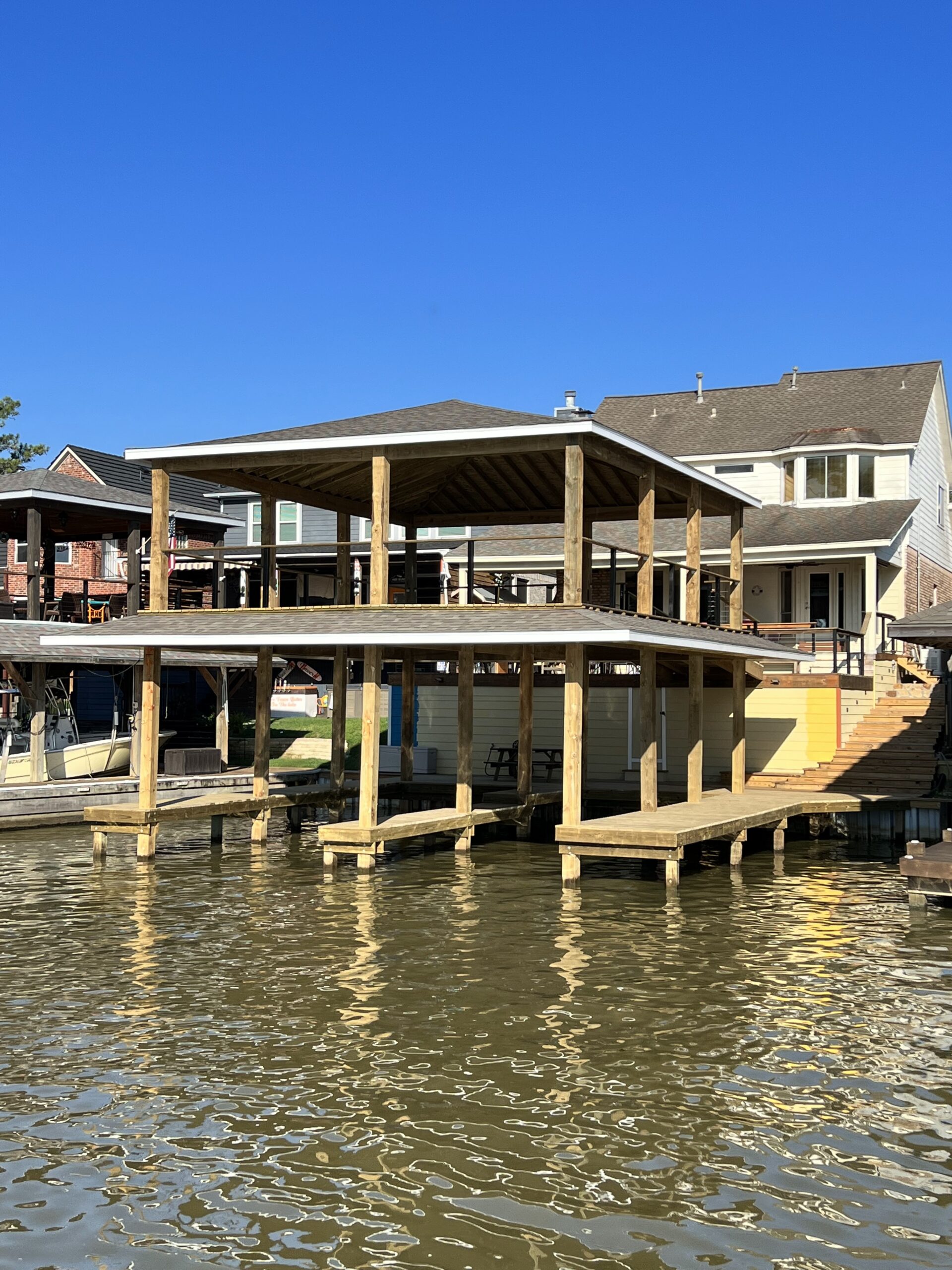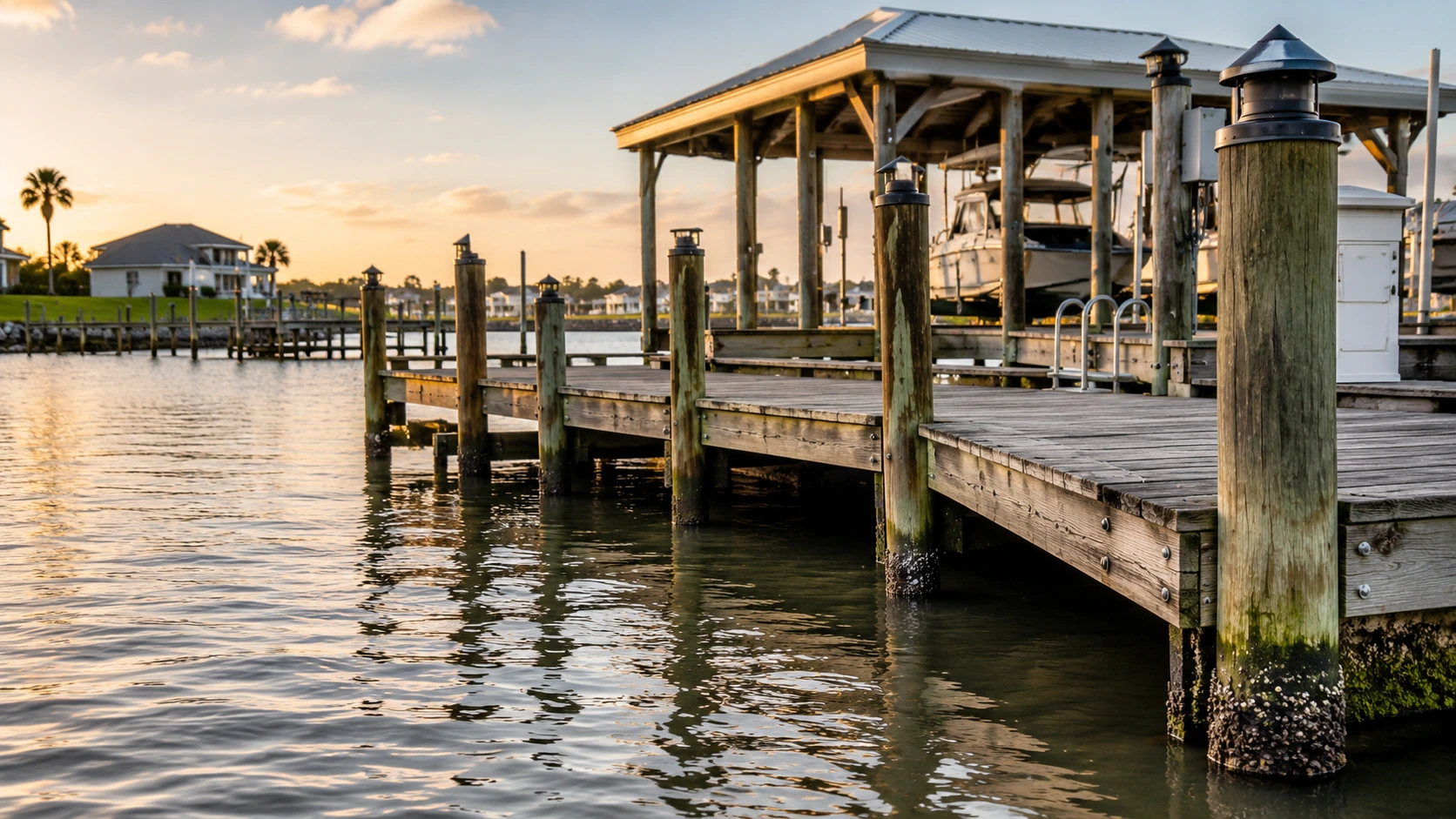
A floating boat house sounds simple when it is just an idea in your head. A roof over the boat, a cleaner setup by the water, maybe a little less stress every time the weather rolls in.
Then you start looking at floating boat house construction and realize the price can swing fast depending on size, shoreline, and how much structure is actually going into the water.
That is where floating boat house construction becomes less about one number and more about what kind of build will actually work for your property without turning into a problem later.
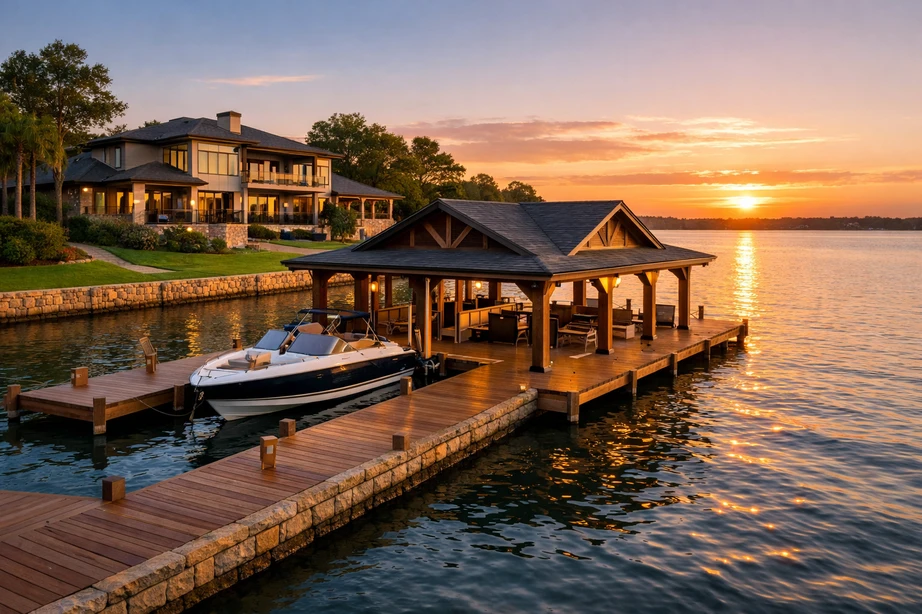
What Changes the Price First
The first thing that changes the cost is size, and that part is simple.
A smaller setup built for one boat is naturally going to cost less than a wide multi-slip structure with extra deck space, heavier roofing, and storage built in. Once the footprint gets larger, every part of the job starts growing with it, including framing, flotation, anchoring, and labor.
Then, water conditions step in and start affecting everything else.
A protected shoreline is one thing. Water that shifts, rises, drops, or pushes harder against the structure is another. That changes how the build has to float, how it anchors, and how much support the frame needs underneath.
That is why floating boat house construction never really starts with design first. It starts with understanding what the water is doing before anyone can speak honestly about final numbers.
Basic Cost Range for Different Floating Boat House Types
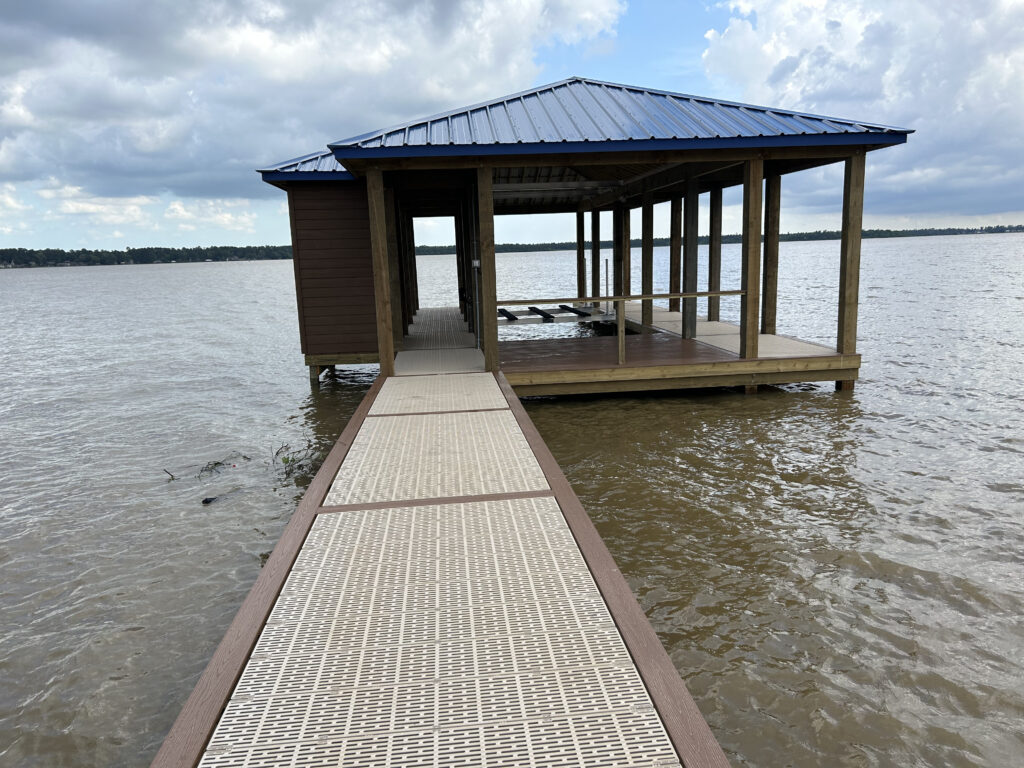
A simple single-slip floating setup usually lands somewhere between $25,000 and $45,000.
That kind of build usually covers:
- basic roof structure
- standard flotation platform
- simple access walkway
- basic tie-up system
It does the job well when the goal is straightforward protection without adding much extra.
A mid-range residential floating boat house usually falls between $50,000 and $90,000.
That often includes:
- upgraded roofing materials
- stronger flotation support
- electrical access
- lighting
- improved decking
- larger covered slip area
This is where people usually start wanting the space to feel easier to live with, not just functional.
A full custom floating boat house with premium materials, lifts, enclosed storage, and larger design details can move well beyond $100,000 without much effort.
And once owners reach that stage, they usually stop thinking only about parking a boat and start thinking about how the whole waterfront experience should work.
Prefabricated vs Custom Builds
Some people first look at a floating prefabricated boat house because it sounds faster and cleaner on paper.
In certain situations, prefabricated sections can reduce labor time because major components arrive partially built and ready to assemble.
That can help early numbers look appealing.
But lower early numbers do not always stay lower once the structure reaches the shoreline.
Transport, adjustments, anchoring changes, and site-specific modifications can push costs up fast if the location does not match the original plan.
That is why many waterfront owners still lean toward floating boat house construction designed specifically for the property instead of trying to make a prebuilt system fit conditions it was never fully designed for.
Floating Dock Systems Matter More Than People Expect
A surprising amount of cost lives underneath the part everybody notices.
The flotation system is doing the hardest work, even though nobody stands there admiring it.
Good floating dock systems control how stable the entire structure feels, how weight gets distributed, and how the platform responds when water levels change.
That affects:
- long-term stability
- weight handling
- resistance to shifting
- durability in changing water levels
If flotation is weak, the entire structure starts telling on itself later.
The same goes for Floating Docks connected to the boathouse. If the dock feels unstable, awkward, or badly aligned, every trip out to the boat reminds you that something was missed.
That is why the hidden parts often deserve more attention than the visible ones.
Installation Costs Are a Big Part of the Total
A lot of owners look at material numbers first and forget how much the floating boat house installation changes the total.
Installation usually includes:
- site prep
- transport
- flotation assembly
- anchoring
- utility setup if needed
- shoreline connection
Some shorelines are simple and easy to reach.
Others require extra equipment, barge access, difficult transport, or heavier anchoring because the site does not cooperate.
That is why floating boat dock house pricing often shifts after the first real inspection. Until somebody stands there, looks at the shoreline, checks water depth, and understands access, the first number is only part of the story.
Maintenance Costs After the Build
A floating structure still needs attention after the build is done.
That does not mean constant problems, but it does mean floating boat house maintenance should always be part of the long-term thinking.
Typical maintenance usually includes:
- checking flotation balance
- inspecting anchor points
- roof repairs
- deck surface treatment
- hardware replacement
- corrosion control
The better the build, the less dramatic this becomes.
But if corners get cut early, maintenance has a way of becoming repair work much faster than people expect.
Water has a habit of exposing weak decisions.
How This Is Different From Houseboats
People often mix up floating structures because the words sound similar.
But What are houseboats compared to floating boathouses really comes down to purpose.
Houseboats are built for living space and mobility.
Boat houses are built to protect watercraft and make shoreline access easier.
That changes everything about how they are designed, what materials matter most, and how they handle weight and utility needs.
A floating boathouse exists to protect what sits under it, not to function like a floating home.
Why Custom Usually Wins Long Term
The reason so many owners eventually choose custom work is that waterfront property rarely behaves in predictable ways.
One shoreline might look easy and still need major structural adjustments once the water starts shifting.
Boat size changes decisions. Wind changes decisions. Access changes decisions.
That is why Dream Boat Docks usually looks at how the property actually behaves before putting serious numbers in front of anyone.
Because once the structure is in the water, the goal is simple. It should feel right every time you use it, not like something you already wish had been done differently.
Final Thought
A floating boat house can stay modest, or it can become one of the biggest upgrades a waterfront property ever gets.
The smartest move is not chasing the lowest quote. It is understanding why the number is what it is and what that number is really buying you years down the line.
If you are thinking about building one and want honest answers tied to your shoreline, Dream Boat Docks can help you sort through the real options, explain what matters most, and show you what drives cost before the first board ever hits the water.
FAQs
What are the disadvantages of float houses?
Living or building on water sounds great until you realize water never really stops testing everything. Float houses need steady upkeep, hardware wears faster, moisture finds weak spots, and even small repairs usually take more effort because nothing is sitting on stable ground.
How much does a floating house cost to build?
The price can move a lot faster than people expect. A smaller basic build may start around $25,000, but once the size increases, materials improve, and site conditions get harder, the total can climb past $150,000 without much warning.
What are the common problems with boat houses?
Most problems usually start small. A loose anchor point, worn decking, shifting flotation, roof leaks, or metal parts beginning to corrode. Left alone, those little issues turn expensive because water has a way of making minor problems grow quickly.
What is the typical lifespan of a houseboat?
A well-built houseboat can stay solid for 30 years or longer, sometimes more, but only if it gets regular attention. The water, weather, and maintenance habits all decide how well that structure holds together over time.