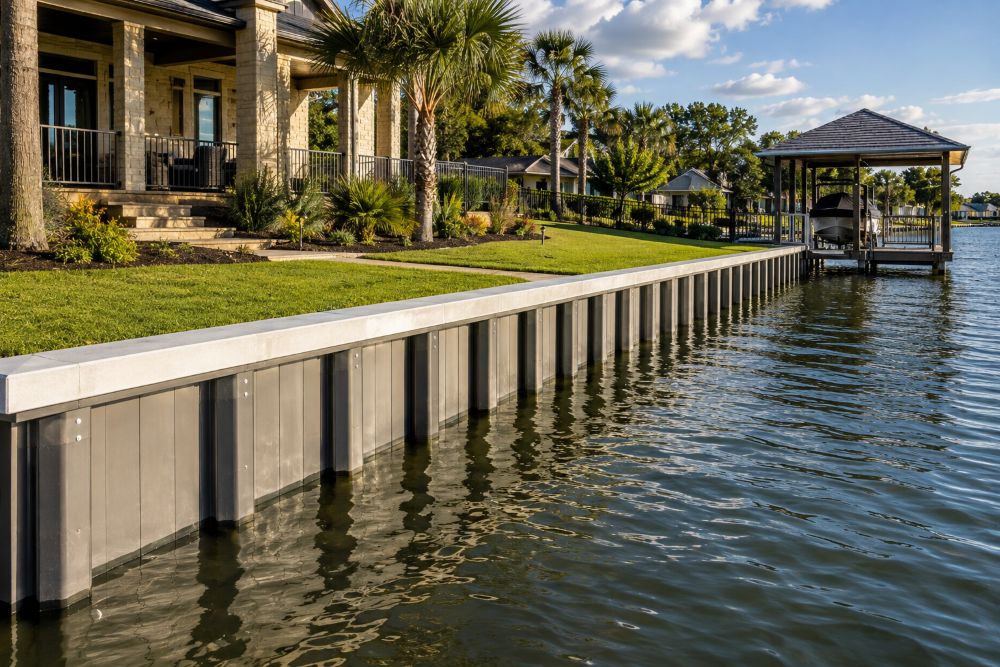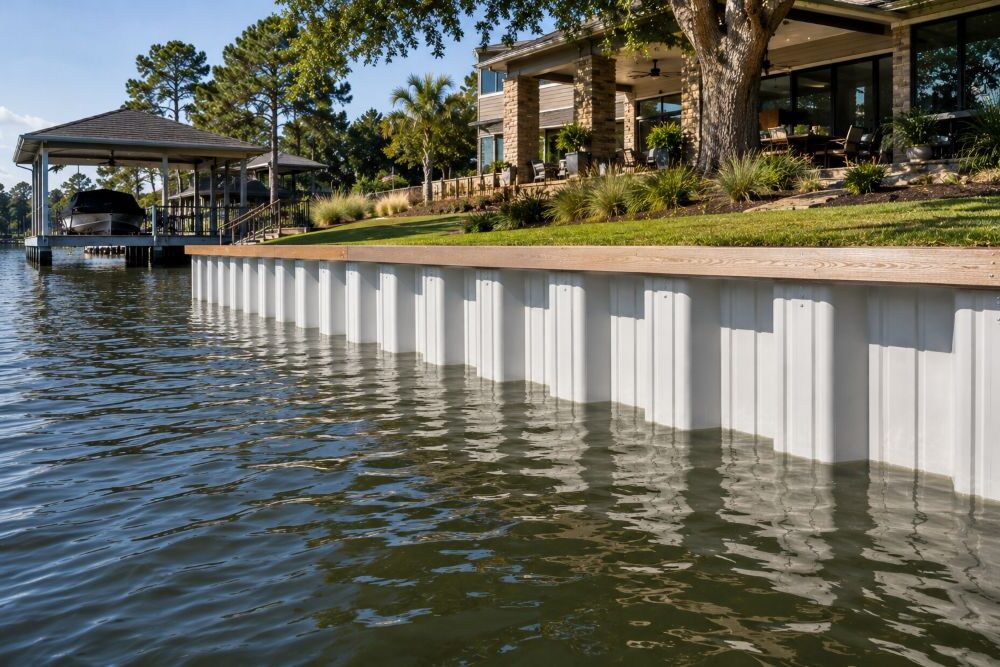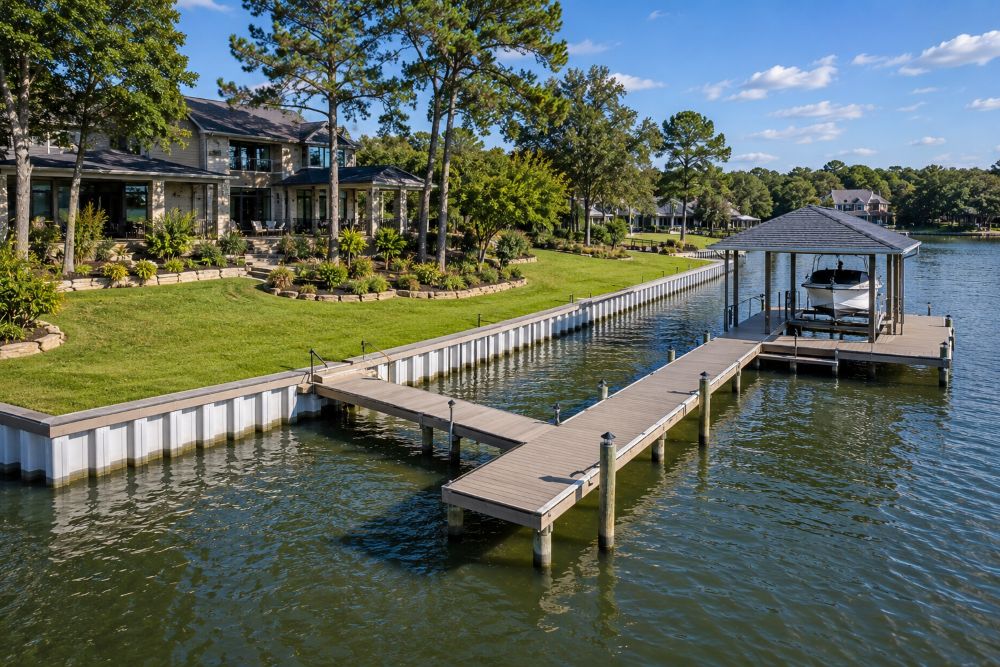
If you own waterfront property, you’ll hear two words pretty fast: bulkheads and seawalls. People use them like they mean the same thing. And from a distance, they kind of look similar. Both sit along the shoreline. Both keep the land from sliding into the water. Both deal with waves, rain, and water pressure every single day.
But they’re not the same thing. They’re built differently. They handle water pressure in different ways. Ignoring issues can lead to costly marine bulkhead repair sooner than you expect.
So let’s break down the real difference between bulkheads and seawalls without turning this into an engineering lecture.
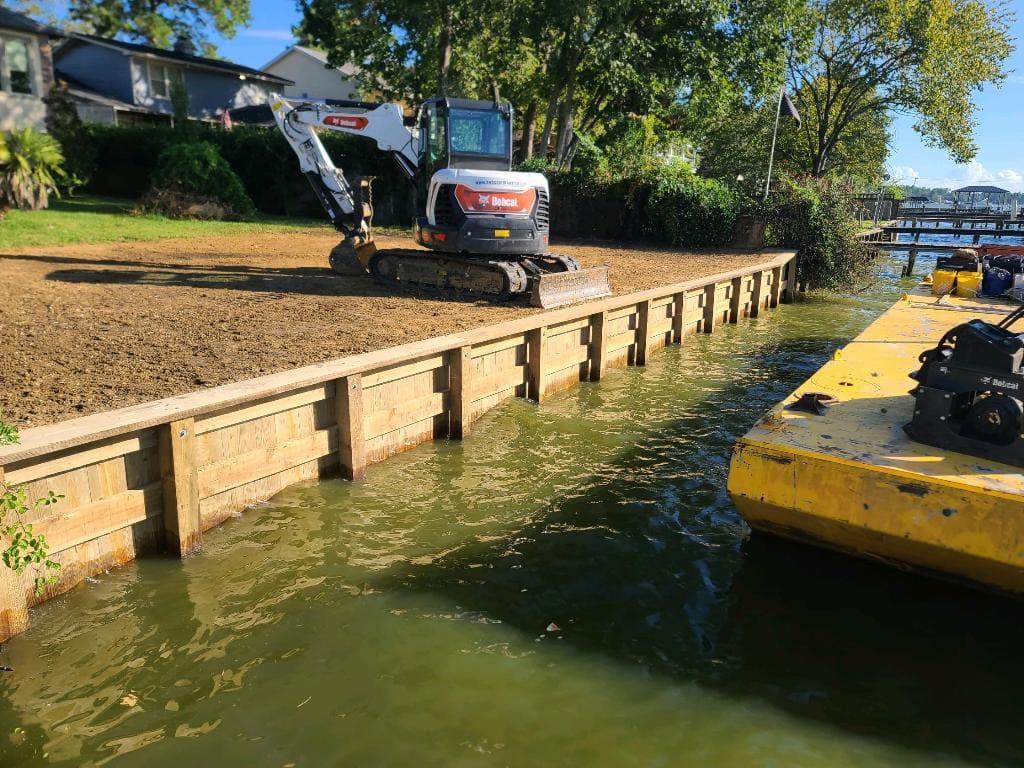
What a Bulkhead Actually Does
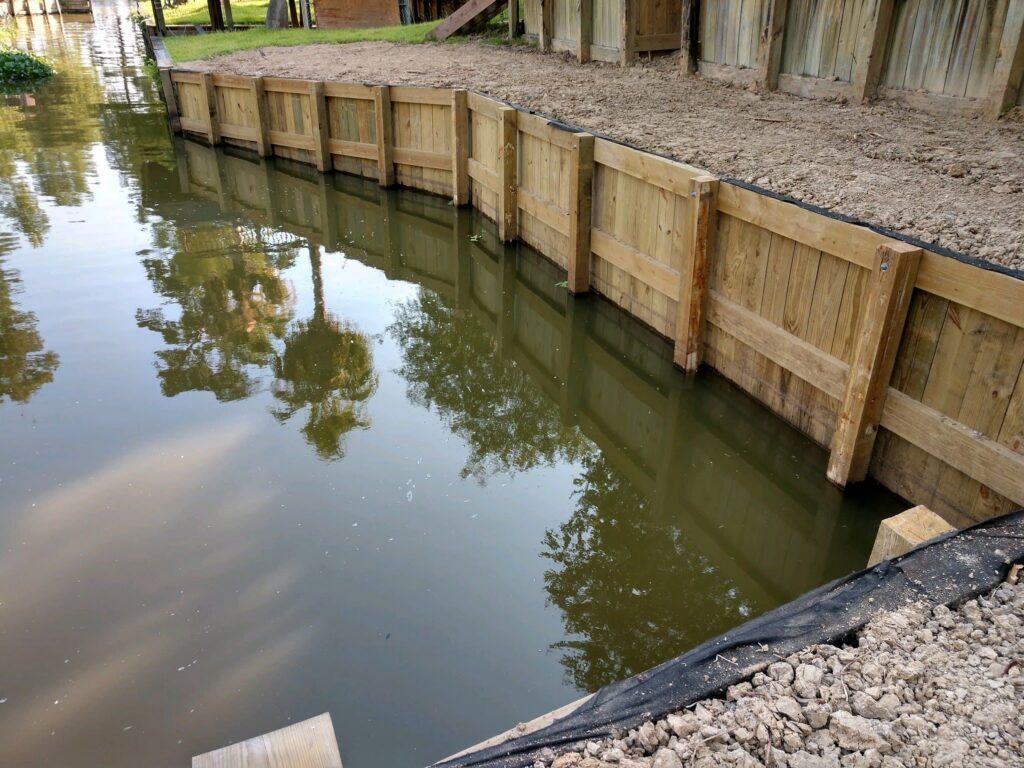
A bulkhead is basically a vertical wall built right along the edge of your property to hold the land in place.
That’s its main job. Shoreline retention.
Without it, soil slowly starts slipping away. Waves pull a little bit each day. Rain loosens the ground. Boat wakes push water against the bank. Over time, the shoreline starts creeping backward.
Bulkheads stop that.
They’re extremely common around lakes, canals, and more peaceful shoreline areas where the water isn’t constantly pounding against the shoreline. You can even find them around docks and boat houses because they provide a clean edge along the water.
A solid bulkhead shore protection system keeps the shoreline stable and prevents erosion from slowly chewing into your property.
But here’s the reality. Water never stops pushing.
As time progresses, boards deteriorate, hardware becomes loose, and soil pressure accumulates behind the wall. When this begins to occur, homeowners typically begin looking for marine bulkhead repair prior to the wall leaning or collapsing.
Regular bulkhead maintenance can catch those issues early. Skip that maintenance, and small problems can turn into expensive ones pretty quickly.
What a Seawall Is Designed to Do
Seawalls deal with a much tougher environment.
Rather than merely stabilizing soil, they are designed to withstand actual wave impact. Their role is to take in the force of waves and safeguard the area behind them.
This is the reason seawalls are denser and more fortified than bulkheads. They are commonly found along coastlines where the shoreline is continuously struck by waves, tides, and storms.
Every wave that crashes into the structure transfers energy into it. Day after day. Year after year.
Eventually, that pressure takes a toll.
That’s when homeowners begin thinking about seawall erosion repair in order to keep their wall strong and stable.
At times, erosion can even begin forming behind the seawall, which is when a professional must come in to repair seawall erosion before the shoreline begins sinking or falling in.
Seawalls are made to be tough, but they can be subjected to a lot more damage from Mother Nature.
Technical Comparison of Bulkheads vs Seawalls
The easiest way to understand the difference is by putting them side by side. Here’s a simple Technical Comparison of Bulkheads vs Seawalls.
| Feature | Bulkheads | Seawalls |
| Primary Purpose | Soil retention and shoreline stability | Protection from strong wave energy |
| Common Locations | Lakes, canals, marinas | Coastal shorelines and open water |
| Construction Style | Vertical retaining wall | A reinforced barrier built to absorb wave force |
| Materials | Timber, vinyl, steel, concrete | Heavy concrete, stone, reinforced steel |
| Maintenance Needs | Regular inspections and repairs | Higher structural stress from waves |
Both systems protect waterfront property. They just handle the water in different ways.
Materials Used in Both Structures
Another big factor is the material used to build them.
Choosing the right bulkhead material matters more than people realize. The wrong material can break down faster depending on the shoreline conditions.
Some of the most common bulkhead options include treated timber, vinyl sheet piling, steel panels, and reinforced concrete.
The Bulkhead Material usually depends on soil type, water depth, and how active the shoreline environment is.
Experienced Bulkhead builders look at all of that before deciding what material works best.
Seawalls rely on heavier materials because they’re constantly absorbing wave impact. Reinforced concrete and stone are common choices because they hold up better against repeated wave pressure.
When Repairs Become Necessary
No shoreline structure lasts forever. Water pressure builds behind the walls. Storms move through. The ground shifts over time.
Eventually, something starts to give.
You might notice cracks, leaning sections, gaps behind the wall, or soil disappearing near the shoreline. Those are early warning signs.
That’s usually when property owners need seawall and bulkhead repair before the problem spreads further.
Sometimes the fix is reinforcing the existing structure. Other times it makes more sense to install a custom bulkhead solution that better fits the shoreline conditions.
Ignoring those warning signs rarely ends well. Small shoreline problems have a habit of turning into big ones.
Which One Is Right for Your Property
The right answer mostly comes down to location.
If your property sits on a calm lake or protected canal, a bulkhead usually works perfectly. It stabilizes the shoreline and keeps the property edge clean and usable.
If your shoreline faces open water where waves constantly push against the land, a seawall is usually the smarter choice.
A proper shoreline inspection looks at water depth, soil conditions, wave activity, and surrounding structures before recommending anything.
That step alone can determine whether the structure lasts decades or starts failing early.
Final Thoughts
Waterfront living is special. The views. The breeze. Easy water access every single day. The shoreline is constantly changing, and the water never stops pounding against it. Without proper protection in place, a minor case of erosion can lead to a more serious case of a structural problem, costing a lot more money in the long run.
Bulkheads and seawalls matter. A lot. Understanding how these systems work helps property owners make smarter shoreline decisions before damage spreads further along the bank or behind the structure.
Seeing leaning walls or sinking soil? Time to act. Dream Boat Docks helps property owners evaluate shoreline problems and handle marine bulkhead repair before things get worse, keeping waterfront property stable and protected for the long run.
FAQs
What is a bulkhead on waterfront property?
A bulkhead is a vertical wall built along the shoreline to hold soil in place and stop erosion. It acts like a retaining barrier between land and water. Bulkheads are common on lakes and canals, where they help stabilize the shoreline and protect waterfront property from gradual land loss.
How to repair seawall erosion?
Repairing seawall erosion usually starts with identifying where soil or support behind the wall has washed away. Contractors may reinforce the structure, fill voids, improve drainage, or strengthen the wall with additional materials. The goal is to restore stability before the erosion weakens the seawall further.
How to build a small bulkhead lake shore?
Building a small bulkhead on a lake shore usually involves installing vertical panels or pilings along the shoreline and anchoring them into the ground. The wall holds soil behind it while backfill stabilizes the land. Choosing the right material and proper installation is critical for long-term shoreline stability.
What is a common repair method for damaged bulkheads?
One common repair method for damaged bulkheads is reinforcing the existing wall with new panels or anchors while stabilizing the soil behind it. In some cases, contractors replace weakened sections or install additional support to strengthen the structure and restore proper shoreline protection.