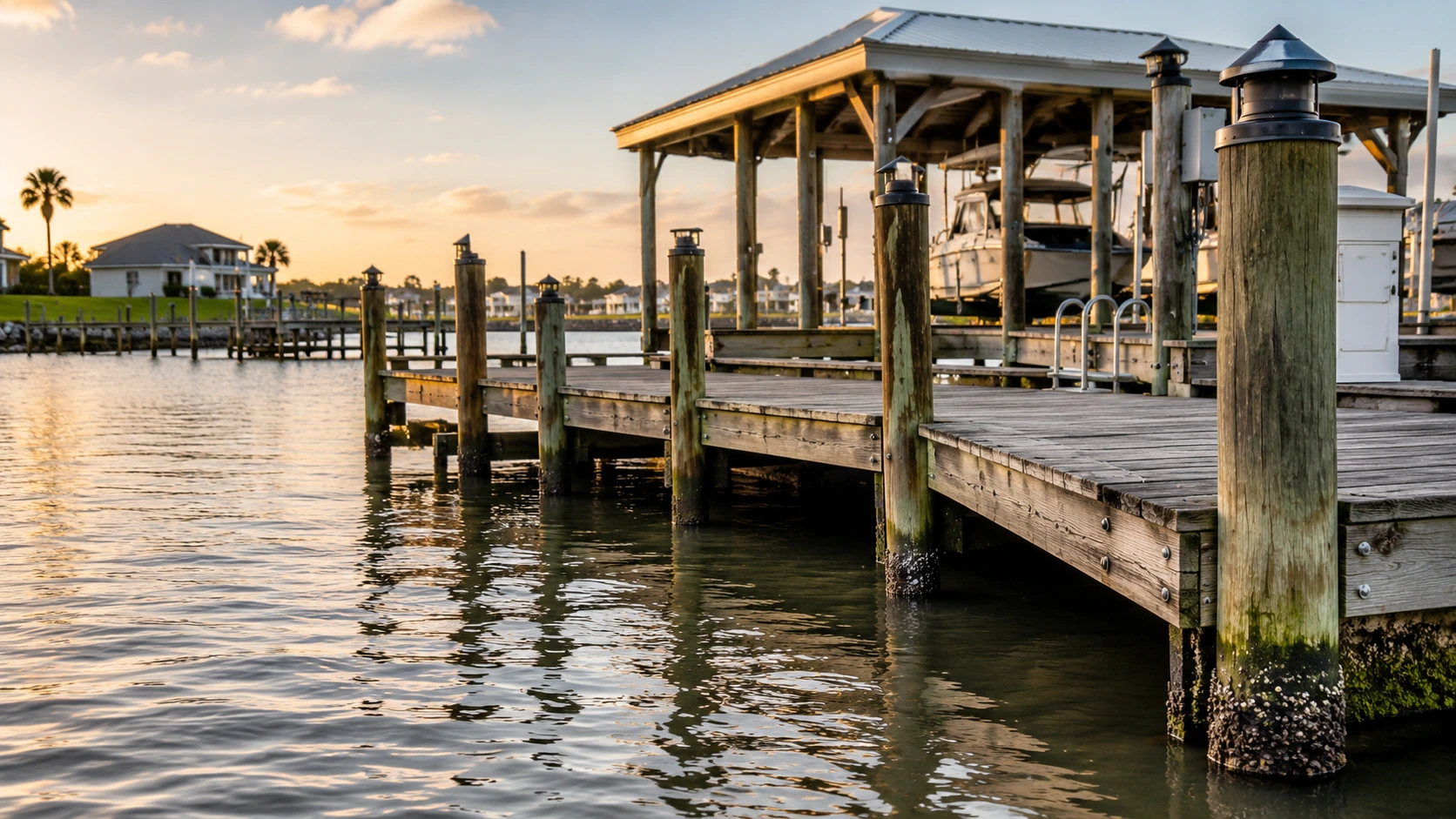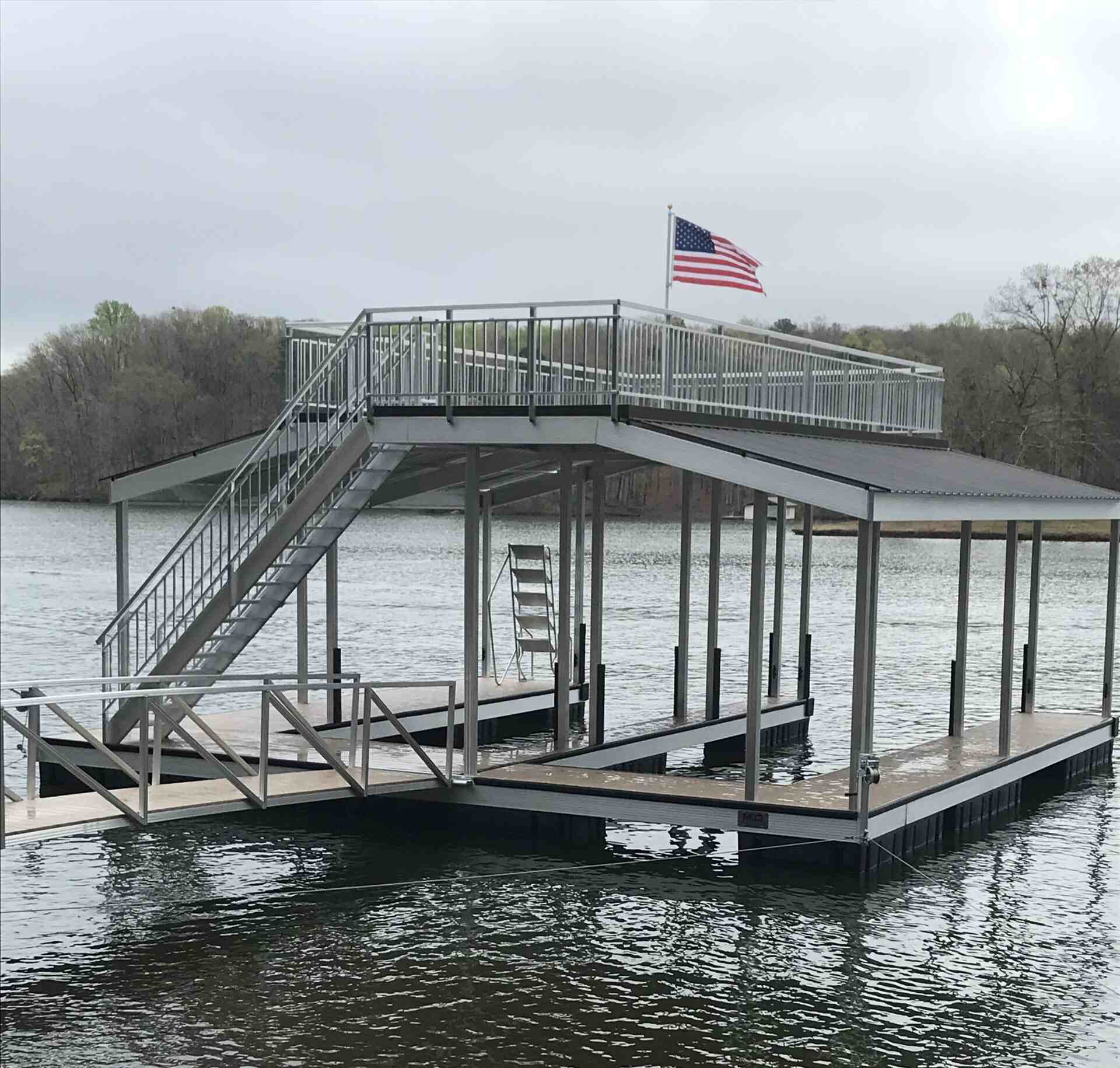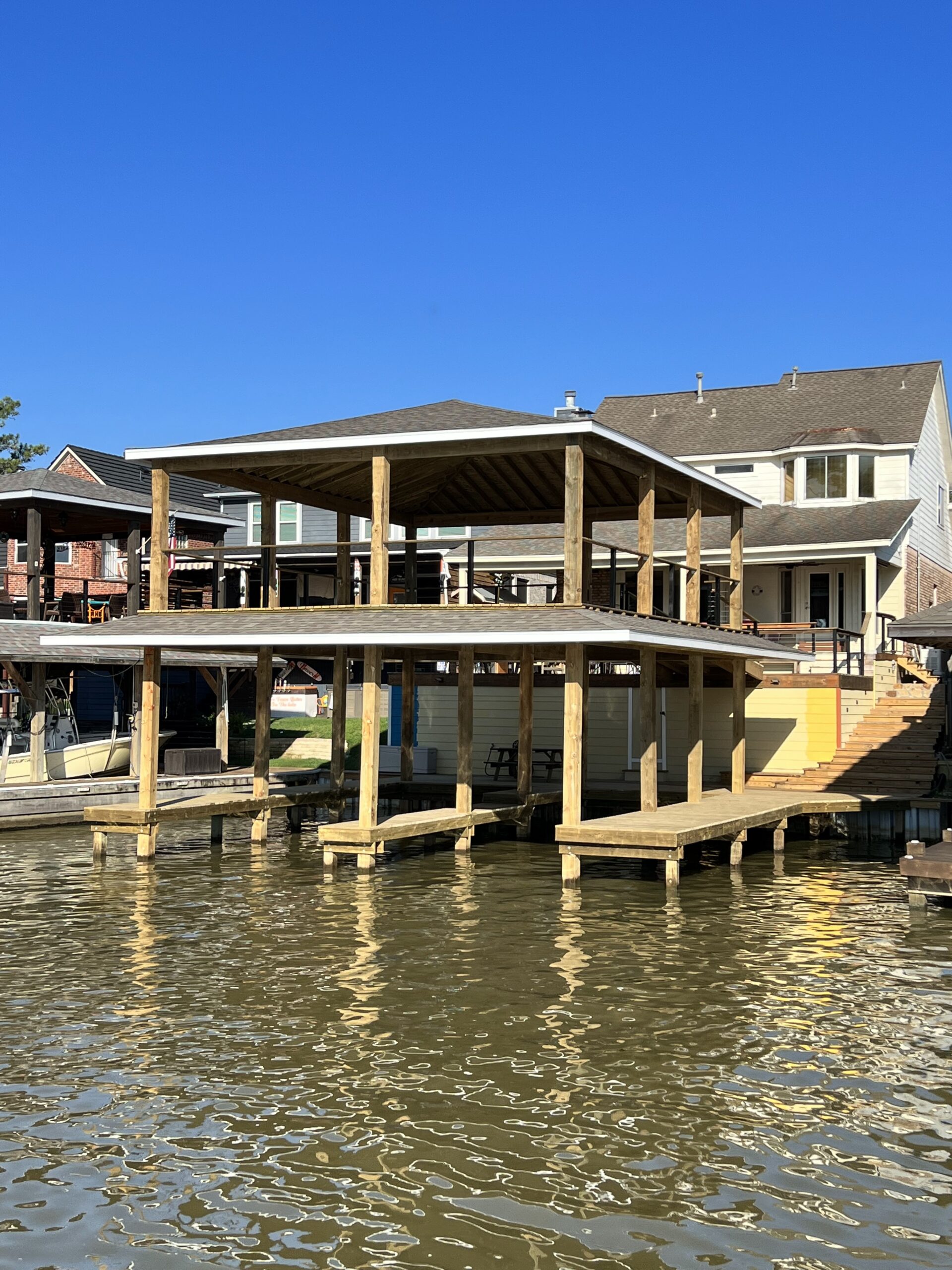
A waterfront pier can provide years of convenient access to Galveston Bay, but it also spends every day exposed to moisture, sun, wind, waves and changing water conditions.
For property owners in La Porte, that environment deserves particular attention. Brackish and salt-influenced water can accelerate corrosion, timber remains exposed to repeated wetting and drying, and some properties may experience significant wave or vessel-wake activity depending on their location.
The good news is that visible wear does not automatically mean your pier needs to be replaced.
Many problems can be repaired when they’re identified early. The key is knowing the difference between normal weathering and signs that the structure, pilings or connections may need professional attention.
Dream Boat Docks has served Texas waterfront property owners since 1987, providing pier construction and repair services, marine piling, boat docks, bulkheads and waterfront repairs throughout La Porte and the Greater Houston area.
This guide explains what La Porte waterfront owners should inspect, common warning signs of pier damage, when repair may be practical and when more extensive reconstruction should be considered.
Key Takeaways
- Normal weathering is different from structural deterioration. Gray wood or faded decking alone does not mean a pier is failing.
- Pay particular attention to pilings, framing, structural connections and the shoreline transition rather than inspecting only the deck surface.
- Leaning pilings, unusual movement, severe corrosion, soft structural wood and repeated soil loss deserve professional evaluation.
- Wood and composite decking have different maintenance needs and should be evaluated separately from the structural foundation.
- There is no universal piling depth or repair method that works for every La Porte waterfront property.
- Permit requirements depend on the scope and location of the work, so substantial structural repairs should be checked with the appropriate local and coastal authorities before construction begins.
- Repair may make sense when damage is localized. Widespread foundation or structural deterioration can make replacement the better long-term option.
Why La Porte Piers Need Regular Attention
La Porte sits along the western side of Galveston Bay, where waterfront structures can be exposed to conditions that differ considerably from an inland lake.
Depending on the property’s location, a pier may encounter:
- Brackish or salt-influenced water
- High humidity
- Strong Texas sun
- Tidal movement
- Wind-driven waves
- Vessel-generated wakes
- Corrosive salt spray
- Storm surge and high-water events
Not every property experiences these conditions to the same degree.
A pier on a protected waterway may see much less wave energy than a structure with greater exposure to the bay or nearby navigation routes. Maintenance and repair recommendations should therefore be based on the individual site rather than a generic coastal checklist.
If you’re planning a new structure rather than repairing an existing one, Dream Boat Docks also provides custom pier construction and boat dock construction throughout the Greater Houston area.
What Are the First Signs a Pier May Need Repair?
Pier problems often develop gradually.
A property owner who knows what to watch for has a better chance of addressing deterioration before it affects a larger portion of the structure.
Soft or Deteriorated Wood
Weathered wood often turns gray without losing its structural integrity.
What matters more is whether the wood has become:
- Soft
- Spongy
- Deeply cracked
- Severely split
- Visibly decayed
- Significantly reduced in section
Structural timber that can be easily penetrated or crumbles under light probing deserves closer evaluation.
Be careful not to aggressively test a component that is already supporting a load.
Heavy Hardware Corrosion
Surface discoloration does not automatically mean a connection has failed.
More concerning conditions include:
- Significant rust buildup
- Deep pitting
- Missing fasteners
- Loose bolts
- Deteriorated washers
- Corroded brackets
- Connections pulling apart
Hardware near brackish or saltwater deserves particular attention because corrosion can progress faster than it does in many freshwater environments.
Leaning or Damaged Pilings
Stand back from the pier and look at the piling alignment.
Watch for:
- A piling that has begun to lean
- Impact damage
- Splitting
- Severe deterioration around the waterline
- Movement that appears new
- Significant differences in elevation between sections of the pier
A leaning piling does not tell you exactly what has failed, but it is a good reason to have the foundation evaluated.
Dream Boat Docks provides marine piling and pile-driving services when existing foundations need repair, reinforcement or replacement.
Changes in the Way the Pier Feels
You do not need to intentionally push or load a questionable pier to test it.
Instead, pay attention during normal use.
Has the pier become noticeably more flexible than it used to be?
Does one section bounce, sag or move differently?
Do railings or framing feel loose?
A meaningful change in how the structure behaves can be an early warning sign even when the source is not immediately visible.
Inspect More Than the Decking
The deck surface is easy to see, but it represents only one part of the structure.
A useful inspection includes:
- Pilings
- Beams
- Joists
- Bracing
- Deck boards
- Fasteners
- Railings
- Electrical components
- Boat-lift connections
- The area where the pier meets the shoreline
Dream Boat Docks provides waterfront construction, remodeling and repair services, so an inspection can determine whether individual components can be repaired while the remaining structure stays in service.
Pay Special Attention to the Pilings
Pilings are part of the foundation that supports the pier.
Depending on the structure, piling material may include treated timber, steel, concrete, composite materials or another engineered system.
For timber pilings, look for:
- Cracking
- Splitting
- Impact damage
- Material loss
- Marine-organism damage
- Significant deterioration near the tidal or splash zone
For steel components, watch for:
- Pitting
- Coating failure
- Substantial corrosion
- Deterioration around connections
A visual inspection cannot always establish the remaining structural capacity of a piling. If deterioration appears substantial, a marine contractor or appropriate design professional should evaluate it.
Learn more about Dream Boat Docks’ piling installation and marine foundation services.
What Causes a Pier to Lean or Sink?
There is no single cause.
Possible contributing factors can include:
- Foundation deterioration
- Piling damage
- Soil movement
- Scour around pilings
- Vessel impact
- Failed connections
- Inadequate bracing
- Long-term settlement
- Severe storm or high-water events
The repair should address the cause rather than simply correcting the visible lean.
Depending on the condition of the pier, work may involve reinforcing an existing foundation, adding or replacing pilings, repairing framing or reconstructing a portion of the structure.
How Deep Should Replacement Pilings Be?
There is no standard piling depth for every La Porte pier.
Foundation requirements depend on factors such as:
- Site-specific soil conditions
- Water depth
- Pier size
- Piling material
- Structural loads
- Lateral forces
- Wave exposure
- Existing foundation conditions
The objective is not simply to drive a piling as deep as possible.
The piling needs to provide the foundation capacity required for the structure and site conditions.
Depending on the project, installation may involve water-assisted methods, driven pilings or another technique appropriate to the foundation design.
Water Jetting vs. Driven Pilings
Different installation methods have legitimate marine-construction applications.
A contractor should not tell you that one method is always correct for every shoreline.
The appropriate approach can depend on:
- Soil
- Piling material
- Piling dimensions
- Water depth
- Access
- Existing structures
- Required foundation capacity
Dream Boat Docks provides marine piling services as part of its broader waterfront construction work and can evaluate which method is appropriate for the project rather than applying the same solution everywhere.
Check Framing, Joists and Bracing
Pilings may support the pier, but framing distributes the loads above them.
Inspect accessible portions for:
- Rot
- Splitting
- Sagging
- Loose connections
- Corrosion
- Missing bolts
- Damaged brackets
- Failed bracing
Cross-bracing can be an important part of some pier designs, but the appropriate bracing configuration depends on the structure.
More bracing is not automatically better if it has not been designed and connected properly.
Wood vs. Composite Decking for La Porte Piers
Decking usually represents a large portion of the visible pier, and it is often one of the first components homeowners consider replacing.
Both pressure-treated wood and composite can be appropriate.
Pressure-Treated Wood
Wood remains popular because it provides:
- Traditional appearance
- Competitive upfront cost
- Straightforward board replacement
- Familiar construction
For coastal or marine applications, treated lumber should be selected for the appropriate exposure and intended use.
The treatment requirements for a submerged structural member are not necessarily the same as those for a deck board above the water.
Wood decking should be cleaned and maintained according to the treatment, finish and coating manufacturer’s recommendations rather than following a universal sealing schedule.
Composite Decking
Composite decking offers:
- Resistance to rot
- Resistance to splintering
- Lower routine maintenance
- Consistent appearance
- Numerous finish and color options
Composite does not mean maintenance-free.
The boards still need cleaning and inspection, and fasteners, framing and the foundation beneath the decking remain important.
In Texas, surface temperature also deserves consideration. Composite decking can become hot in direct sunlight, with temperature varying by product, color and exposure.
Homeowners should choose the specific material based on appearance, maintenance preferences, budget and sun exposure rather than assuming all composite products perform the same way.
Dream Boat Docks also uses composite materials across various dock and waterfront construction projects.
What About Flow-Through Decking?
Open-grid or flow-through decking can be useful for certain waterfront applications because water can pass through portions of the surface rather than acting against one continuous deck.
That does not mean flow-through decking is automatically necessary for every residential pier.
Its suitability depends on:
- Pier design
- Structural framing
- Intended use
- Cost
- Appearance
- Exposure
- Applicable requirements
The decking should be considered as one component of the complete structure.
Hardware for Brackish and Coastal Environments
No single fastener material is universally required for every La Porte pier.
Possible options can include:
- Properly specified hot-dip galvanized hardware
- Appropriate grades of stainless steel
- Coated structural connectors
- Other products intended for the exposure conditions
The correct choice depends on:
- Freshwater versus salt-influenced exposure
- Structural load
- Connected materials
- Manufacturer requirements
- Location of the connection
- Material compatibility
The last point is important.
Dissimilar metals exposed to moisture can contribute to galvanic corrosion, so fasteners and connectors should be selected as part of the overall material system.
Inspect the Shoreline Transition
The area where the pier reaches land deserves attention, but the pier should not automatically be assumed to rely structurally on the bulkhead.
Instead, look for problems such as:
- Soil loss
- Erosion
- Settlement
- Unsafe elevation changes
- Damaged ramps or stairs
- Deteriorated framing
- Drainage problems
- Voids around the shoreline
If the property also has a bulkhead, evaluate it separately.
A failing shoreline wall can create erosion and access problems even if the pier’s piling foundation remains sound.
Dream Boat Docks provides bulkhead construction and repair services along with pier and dock work, allowing both systems to be evaluated as part of the overall waterfront.
When Should a Pier Be Repaired Instead of Replaced?
Repair can make sense when deterioration is localized.
Examples can include:
- Damaged decking
- Isolated framing deterioration
- Loose or corroded hardware
- Localized railing problems
- Individual piling issues
- Damaged bracing
- Boat-lift connection problems
Replacement may become more practical when:
- Multiple pilings are severely deteriorated
- Foundation movement is widespread
- Major structural framing has failed
- The original structure no longer meets the owner’s needs
- Repeated repairs are approaching the cost of reconstruction
The answer should come from the condition of the structure, not a blanket rule based on its age.
Dream Boat Docks offers waterfront construction, remodeling and repair services for both new structures and existing docks and piers that need repair or substantial renovation.
A Practical La Porte Pier Inspection Checklist
Property owners do not need to perform a structural engineering inspection themselves.
A useful homeowner walk-through is about identifying changes.
1. Look Along the Piling Line
Check for new leaning, movement or obvious physical damage.
2. Walk the Deck Normally
Notice new sagging, excessive movement, loose boards or unstable areas.
Do not intentionally stress a structure that appears unsafe.
3. Check Visible Hardware
Look for missing fasteners, heavy corrosion, loose connections or brackets pulling away.
4. Inspect Accessible Framing
Look beneath the pier where it is safe to do so.
Check for obvious rot, splitting, corrosion or damaged bracing.
5. Inspect the Shoreline
Watch for soil loss, erosion, settlement and unsafe transitions between land and the pier.
If shoreline erosion appears significant, review Dream Boat Docks’ bulkhead construction services to learn about shoreline stabilization options.
6. Look at Utilities
If the pier has electricity or water, check visible components for obvious deterioration, leaks, damaged conduit or exposed wiring.
Do not attempt electrical repairs yourself unless you are qualified to do so.
7. Inspect Again After Major Events
Storms, unusual high water, debris impacts and vessel collisions can change a structure quickly.
If something looks or feels different afterward, consider a professional evaluation.
Pier Electrical Safety
Water and electricity require particular care.
If a pier contains lighting, receptacles, boat-lift power or other electrical equipment, inspect visible components for:
- Damaged conduit
- Broken covers
- Corrosion
- Loose fixtures
- Exposed conductors
- Evidence of water intrusion
Electrical work around docks should be handled by qualified professionals familiar with the requirements applicable to installations around water.
Protective devices should be tested according to the manufacturer’s instructions.
If you suspect electrical damage, limit access to the affected area until it has been evaluated.
Do Pier Repairs in La Porte Require a Permit?
It depends on the work.
The City of La Porte’s Building Permit Services division manages building permits, plan review and inspections for construction subject to City requirements.
A minor maintenance task does not necessarily have the same requirements as:
- Replacing structural framing
- Adding or replacing pilings
- Expanding a pier
- Reconstructing a substantial portion of the structure
- Building a new pier
- Changing the shoreline
- Performing work within a regulated floodplain or coastal area
Depending on the location of the property and the work being performed, additional local, state or federal approvals may also apply.
Projects involving state-owned submerged land, regulated waters, fill or other coastal resources can have requirements beyond a basic City building permit.
Because jurisdiction varies by property, it is better to verify the requirements before significant work begins than to assume every La Porte pier follows the same permit process.
How Long Does Pier Repair Take?
There is no standard timeline.
A relatively straightforward decking or framing repair may move quickly once materials are available.
A project involving new pilings, significant structural reconstruction, engineering or multiple permits will take longer.
Factors include:
- Scope of damage
- Water access
- Material availability
- Piling work
- Permitting
- Engineering when required
- Weather
- Utilities
- Existing structural condition
A contractor should provide a schedule based on the actual repair scope rather than promising every pier can be completed within the same number of weeks.
How Often Should You Inspect a Pier?
There is no universal residential inspection interval.
Instead, inspect often enough that you are familiar with the normal condition of the structure.
Pay particular attention:
- After major storms
- After unusual high-water events
- After vessel or debris impacts
- When you notice movement
- When new corrosion becomes visible
- When boards or connections begin deteriorating
- When the structure feels different during normal use
Older piers or structures in more exposed locations may warrant more frequent professional attention.
Why Hire a Marine Contractor for Pier Repair?
A loose deck board and a failing piling are very different problems.
Marine repair work can involve:
- Pile driving
- Water-based equipment access
- Structural framing
- Bracing
- Corrosion-resistant connections
- Shoreline conditions
- Changing water levels
- Permitting
- Boat lifts
- Existing bulkheads
An experienced marine contractor can evaluate the repair as part of the entire waterfront system rather than focusing only on the visible symptom.
Dream Boat Docks has served Texas waterfront property owners since 1987 and provides piers, boat docks, pilings, bulkheads, boat houses, boat lifts, and construction and remodeling services throughout Greater Houston.
Property owners can also view completed Dream Boat Docks waterfront projects to see examples of marine construction work.
Protect Your Pier by Addressing Problems Early
Not every crack, stain or weathered board is a structural emergency.
What matters is whether the condition affects the structure or is getting worse.
Pay attention to:
- New movement
- Soft structural wood
- Severe corrosion
- Piling deterioration
- Soil loss
- Sagging
- Loose structural connections
- Storm or impact damage
Early evaluation can sometimes turn what might eventually become a large reconstruction project into a more manageable repair.
If your La Porte pier is showing signs of deterioration, Dream Boat Docks can evaluate the existing structure and determine whether repair, reinforcement or replacement is the better approach.
Contact Dream Boat Docks to request a waterfront evaluation and free estimate.
Frequently Asked Questions
How much does pier repair cost in La Porte?
Cost depends on the extent and location of the damage.
Important factors can include:
- Piling repairs
- Framing
- Decking
- Hardware
- Access
- Water depth
- Utilities
- Structural reconstruction
- Permitting
- Material choice
A site evaluation is the most reliable way to determine the actual repair scope.
Do I need a permit for pier repairs in La Porte?
It depends on the scope and location of the project.
Structural reconstruction, piling work, expansion and other significant modifications may require City permits or additional coastal approvals.
Routine maintenance may be treated differently.
Check the applicable requirements before starting substantial structural work.
How long does a pier last in Galveston Bay?
There is no dependable universal lifespan.
Service life depends on:
- Foundation and piling material
- Construction quality
- Hardware
- Water exposure
- Storms
- Marine organisms
- Maintenance
- Vessel impacts
- Decking and framing materials
A well-built and maintained structure can provide many years of service, but a fixed 15-, 20- or 30-year lifespan would be misleading without considering the individual pier.
What type of wood should be used for a coastal pier?
Wood used for marine construction should be pressure treated for the specific exposure and intended application.
The appropriate treatment level for structural components exposed to brackish or saltwater may be different from the treatment required for decking above the water.
A marine contractor should select materials that meet the applicable specifications for the component and environment.
Can a leaning pier be repaired?
Sometimes.
The cause of the movement needs to be identified first.
Repair may involve pilings, framing, bracing or structural connections.
If the foundation is extensively deteriorated or multiple sections have failed, partial or complete replacement may be more practical.
How often should a waterfront pier be professionally inspected?
There is no one inspection interval for every residential pier.
Consider professional evaluation when the structure develops new movement, deterioration or damage and after significant events that may have affected it.
Older or more exposed structures may justify more frequent attention.
Is composite decking better than wood for a La Porte pier?
Neither is universally better.
Composite offers lower routine maintenance and resistance to rot and splintering.
Pressure-treated wood offers a traditional appearance, straightforward repair and a lower upfront cost in many applications.
The right option depends on budget, maintenance preferences, appearance, sun exposure and the structure beneath the decking.
Does Dream Boat Docks repair existing piers?
Yes. Dream Boat Docks provides pier construction and repair services along with broader waterfront remodeling and renovation services.
Should I replace my bulkhead when repairing my pier?
Not automatically.
The pier and bulkhead perform different functions.
If the bulkhead is leaning, deteriorating or contributing to shoreline erosion, it should be evaluated as part of the project.
If the bulkhead remains serviceable, pier repair may be completed without replacing it.
What should I do if my pier was damaged during a storm?
Limit use of any area that appears unstable.
Look for new piling movement, missing decking, damaged framing, loose railings and electrical damage.
If the structure experienced significant movement or impact, have it evaluated before returning it to normal use.
Need help with pier repair in La Porte? Contact Dream Boat Docks for a professional waterfront evaluation and free estimate.