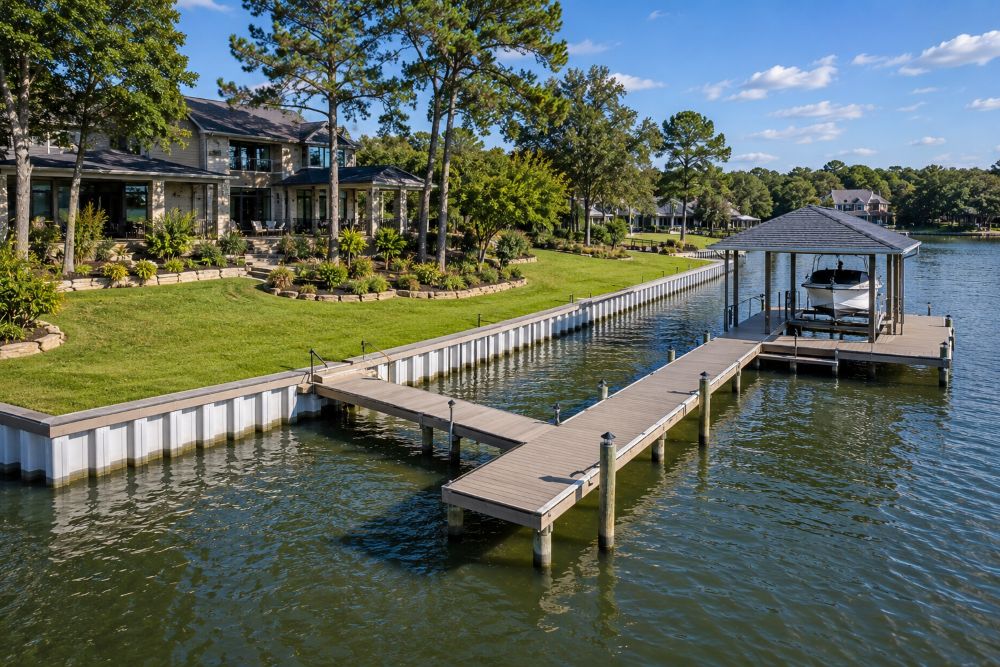
A custom boathouse does much more than provide a place to keep your boat.
For Houston-area waterfront property owners, a well-designed boathouse can provide overhead protection for a vessel, integrate a boat lift, create convenient storage and access, and add valuable usable space to the waterfront. It can also be designed to complement the architecture of the home rather than looking like a separate utility structure.
Building one correctly, however, requires experience with marine construction.
Water depth, soil conditions, pilings, structural loads, wind exposure, boat size, lift capacity, electrical requirements, permitting and HOA restrictions can all affect the final design.
Dream Boat Docks has served Texas waterfront property owners since 1987, building custom boat houses, docks, piers, boat lifts, pilings, bulkheads and other waterfront structures throughout Lake Conroe, Lake Houston, Clear Lake, Seabrook, Baytown and the Greater Houston area.
This guide explains what to consider when planning a custom boathouse, how the construction process works, which features may be worth including and how to choose an experienced Houston marine contractor for your project.
Key Takeaways
- A custom boathouse can protect a vessel from direct sunlight, rain and debris while improving everyday access to the water.
- The foundation and piling system are among the most important structural components of any boathouse.
- Single-slip, multi-slip, open-sided, covered and upper-deck configurations can all be customized to the property and vessel.
- Boat lifts should be selected according to vessel weight, dimensions and intended use—not added as an afterthought.
- Permitting requirements differ between Lake Conroe, Lake Houston and coastal or tidally influenced waterways.
- A boathouse may improve a waterfront property’s functionality and buyer appeal, but there is no reliable universal percentage by which it increases property value.
- An experienced marine contractor should evaluate the site and coordinate construction, permitting and engineering when required.
Why Build a Custom Boathouse?
Leaving a boat exposed to the Texas sun, rain and weather can accelerate wear on upholstery, finishes and equipment.
A covered boathouse provides overhead protection while giving the property owner convenient access to the vessel.
Depending on the design, it may also include:
- One or more covered slips
- Integrated boat lifts
- Jet ski or personal-watercraft lifts
- Storage
- Lighting
- Electrical service
- Wash-down connections
- Seating
- Fishing areas
- Composite or wood decking
- Upper entertainment decks where allowed
- Railings and stairs
- Architectural features designed to complement the home
The result can be much more than a covered parking space for a boat.
A thoughtfully planned boathouse can become one of the most frequently used areas of a waterfront property.
Protecting Your Boat From Texas Weather
A boathouse does not create a climate-controlled environment simply because it has a roof.
It does, however, provide meaningful protection from several forms of direct exposure.
Sun and UV Exposure
Texas sunlight can affect upholstery, plastics, finishes and other exposed boat components over time.
A properly positioned roof reduces the amount of direct sunlight reaching the vessel.
Rain and Debris
Overhead protection can reduce exposure to rain, leaves, bird droppings and other debris that would otherwise collect directly on the boat.
Keeping the Hull Out of the Water
When a boathouse incorporates a properly sized boat lift, the vessel can be stored above the water when it is not being used.
This can help reduce constant hull exposure to the water and make routine cleaning and maintenance easier.
For boat owners deciding how much protection they need, Dream Boat Docks also provides a useful comparison of a boat house versus a boat lift alone.
Does a Boathouse Increase Property Value?
A well-built boathouse can make a waterfront property more attractive to certain buyers, particularly when the structure is permitted, well maintained and designed appropriately for the property.
The greatest value is often its functionality.
A buyer who owns a boat may place considerable value on:
- Covered vessel storage
- A properly sized boat lift
- Convenient water access
- Quality waterfront construction
- Additional deck or entertaining space
- Storage
- A structure that does not require immediate repair or replacement
However, there is no credible universal rule that a boathouse increases a home’s value by 10%, 20% or any other fixed amount.
Its impact depends on the local market, property, water access, condition, design and buyer demand.
For that reason, Dream Boat Docks recommends thinking of a boathouse first as an investment in waterfront functionality, vessel protection and enjoyment of the property, with potential resale appeal as an additional benefit.
Designing a Boathouse to Match Your Waterfront Property
Custom construction allows the boathouse to reflect both the vessel and the home.
Important design considerations include:
- Number of slips
- Boat dimensions
- Boat-lift capacity
- Roof design
- Decking
- Water depth
- Piling locations
- Property setbacks
- HOA requirements
- Storage
- Lighting and electrical needs
- Views from the home
- Future boats or personal watercraft
- Upper-deck possibilities
- Access from the shoreline
An experienced boathouse builder should consider these factors before finalizing the structure.
Dream Boat Docks provides custom waterfront construction and remodeling for properties that require a new build as well as existing docks and boathouses that need substantial upgrades.
Single-Slip vs. Multi-Slip Boathouses
The number and size of slips should reflect both current and anticipated boating needs.
Single-Slip Boathouse
A single-slip structure may be appropriate for a homeowner with one primary boat who wants straightforward covered storage and a lift.
It can still incorporate features such as:
- Side decking
- Storage
- Lighting
- A seating area
- Fishing access
- Personal-watercraft storage
Multi-Slip Boathouse
A larger structure may accommodate:
- Two or more boats
- Jet skis
- Different vessel sizes
- Multiple lifts
- Larger storage areas
- Additional deck space
If a homeowner expects to upgrade to a larger boat or add another vessel in the future, it is worth discussing those plans during the initial design phase.
Changing a boathouse after construction can be substantially more complicated than allowing for future needs from the beginning.
Open-Sided vs. More Enclosed Designs
Many Texas boathouses use an open-sided covered design.
This provides shade and overhead weather protection while maintaining airflow, visibility and easy access to the water.
More enclosed configurations may provide additional privacy or protection from wind-blown debris, but whether walls or enclosures are appropriate depends on:
- Local regulations
- HOA restrictions
- Wind exposure
- Property layout
- Structural design
- Desired ventilation
- The overall appearance of the home and waterfront
The goal should be to create the appropriate level of protection without adding unnecessary complexity or restricting airflow and visibility.
Choosing a Boathouse Roof
Roof design affects appearance, clearance, drainage and performance in high winds.
Gable Roofs
Gable roofs provide a traditional architectural appearance and can create substantial vertical clearance beneath the roof.
They can work particularly well when the homeowner wants to match the roofline of the residence.
Hip Roofs
A hip roof slopes on all sides and can offer aerodynamic advantages in high-wind conditions.
However, roof shape alone does not determine storm performance.
Framing, connections, fasteners, sheathing, roof-cover attachment and the complete load path all contribute to the performance of a roof system.
Metal Roofing
Standing-seam and other appropriately designed metal roofing systems can provide long service life and a clean waterfront appearance.
Material specifications and attachment methods are particularly important in high-wind or coastal environments.
Architectural Shingles
Architectural shingles may be selected when matching the primary residence is a priority.
The appropriate roof system depends on aesthetics, wind requirements, budget, maintenance preferences and applicable building requirements.
Decking Options for a Custom Boathouse
The deck surface affects appearance, comfort, maintenance and long-term use.
Pressure-Treated Wood
Pressure-treated wood provides:
- A classic waterfront appearance
- Competitive initial cost
- Familiar construction
- Easy replacement of individual boards
It does require ongoing maintenance and can eventually splinter, weather or deteriorate.
Composite Decking
Composite decking offers:
- Resistance to rot
- Resistance to splintering
- Lower routine maintenance
- Consistent appearance
- A broad selection of finishes and colors
However, composite decking can become hot in direct Texas sunlight.
Surface temperature varies by brand, product and color, so homeowners should consider sun exposure and material selection rather than assuming all composite decking stays cooler than wood.
Dream Boat Docks can help property owners select decking based on appearance, maintenance preferences, budget and the conditions of the site.
Boat Lifts: An Important Part of Boathouse Design
The boat lift should be planned together with the boathouse rather than treated as an accessory added at the end.
Important considerations include:
- Vessel weight
- Vessel length and beam
- Hull configuration
- Lift capacity
- Water depth
- Slip dimensions
- Electrical requirements
- Future vessel plans
Dream Boat Docks offers customizable lifts for boats including pontoons, bass boats, wake boats, personal watercraft and other vessels.
Depending on the system, optional features can include remote operation.
Choosing adequate capacity is important not only for the current boat but also for any likely future upgrade.
Pilings and the Boathouse Foundation
The roof and decking may be the most visible elements of a boathouse, but the foundation beneath the water is critical to long-term performance.
Marine pilings transfer the loads of the structure into the underlying soil.
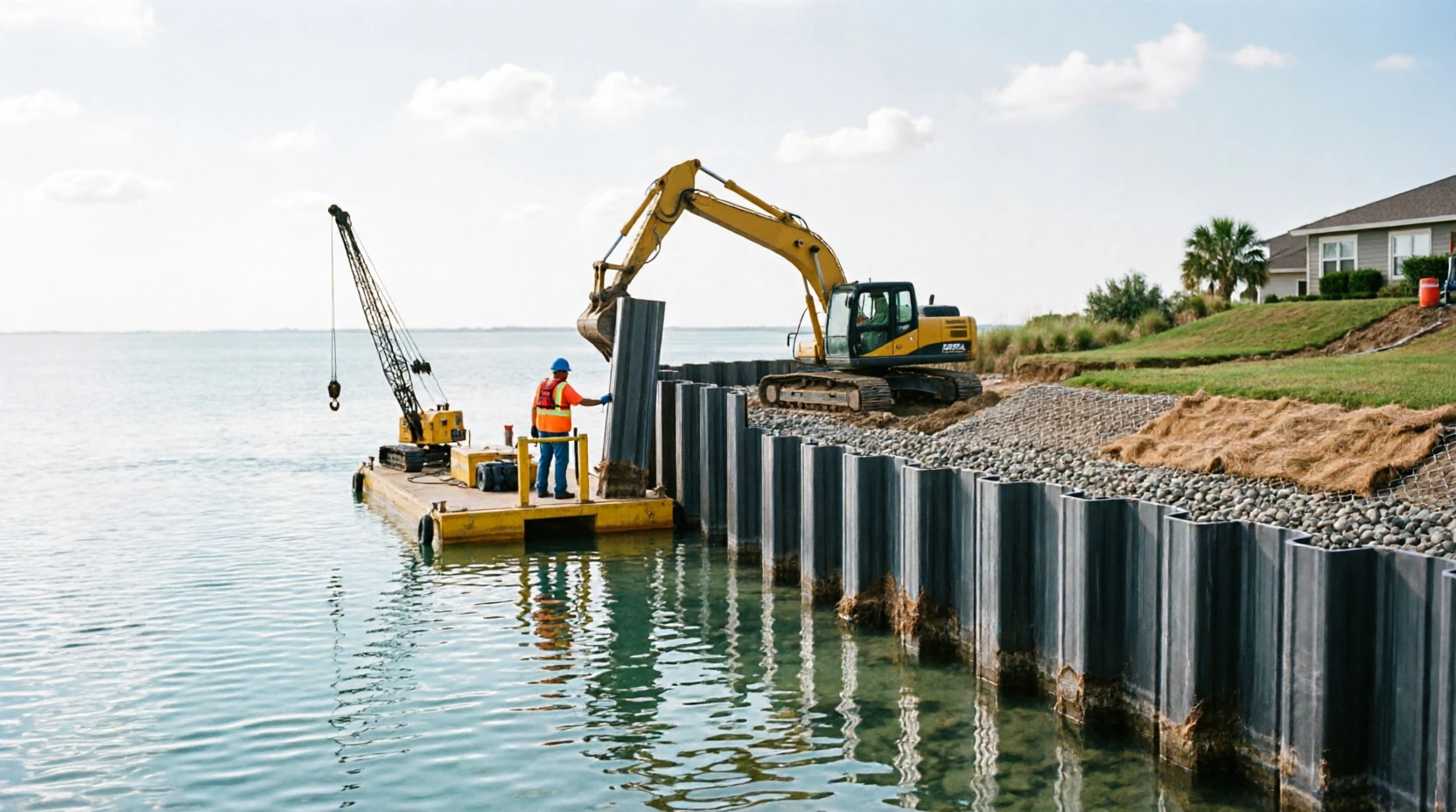
Dream Boat Docks provides marine piling and pile-driving services using materials including:
- Timber piling
- Steel piling
- Concrete piling
- Sheet piling
- Other piling systems appropriate to the project
How Deep Should Boathouse Pilings Be?
There is no universal piling depth for Houston boathouses.
Depth depends on factors including:
- Soil conditions
- Water depth
- Structure size
- Roof loads
- Wind loads
- Boat-lift loads
- Lateral forces
- Piling material
- Required foundation capacity
A contractor should not simply promise a standard depth that applies to every waterfront property.
Depending on the project, pilings may be driven to a specified embedment depth or to conditions established by the structural design and subsurface conditions.
High-Wind and Storm Considerations
No responsible marine contractor should describe a boathouse as hurricane-proof.
Texas waterfront construction can be exposed to high winds, rising water, debris and other extreme conditions.
Design considerations may include:
- Piling and foundation capacity
- Roof uplift
- Structural connections
- Bracing
- Corrosion-resistant connectors
- Deck and framing connections
- Boat-lift loads
- Local design criteria
The objective is to design and build for applicable conditions and loads while recognizing that extreme storms can exceed design assumptions.
Corrosion-Resistant Hardware and Materials
Waterfront construction places unusual demands on fasteners, connectors and equipment.
Hardware should be selected according to the environment.
Freshwater Lake Conroe conditions, for example, differ from the brackish or salt-influenced environment around Baytown, Seabrook and portions of Clear Lake.
Depending on exposure and structural requirements, appropriate materials may include certain grades of:
- Stainless steel
- Hot-dip galvanized steel
- Coated hardware
- Other corrosion-resistant connectors designed for exterior or marine use
Material compatibility is also important because using dissimilar metals together can contribute to galvanic corrosion in certain environments.
Upper Decks and “Party Decks”
For some waterfront properties, an upper viewing or entertainment deck can add substantial usable space.
Dream Boat Docks already builds custom boathouses incorporating features such as entertainment decks on both Lake Conroe and Lake Houston.
Where regulations and site conditions allow, an upper deck may provide space for:
- Seating
- Lake views
- Outdoor entertaining
- Fishing
- Dining
- Lounging
The additional level changes the structural demands of the boathouse.
Design needs to account for:
- Additional live loads
- Wind exposure
- Stairs
- Guardrails
- Foundation capacity
- Structural framing
- HOA requirements
- Local permitting limitations
An upper deck should therefore be incorporated into the original structural planning whenever possible.
Lighting, Electrical and Other Custom Features
A custom boathouse can be designed around how the owner actually uses the waterfront.
Popular additions may include:
- LED lighting
- Dock lighting
- Underwater lighting
- Electrical outlets
- Boat-lift power
- Storage
- Freshwater wash-down connections
- Fishing stations
- Benches
- Safety railings
- Wi-Fi coverage
Any electrical work around water requires particular attention to applicable codes, equipment and installation methods.
Licensed professionals should be used where required.
Permitting a Boathouse on Lake Conroe
Lake Conroe has specific requirements administered by the San Jacinto River Authority (SJRA).
Private structures cannot be constructed, operated or maintained on Lake Conroe or SJRA-controlled land without the appropriate permit or license.
For residential structures, SJRA currently requires materials including:
- A completed residential license agreement
- Plans drawn to scale
- Accurate dimensions
- Location of the proposed structure on the property
- Distances from adjacent properties
- HOA, POA or architectural-control approval when required by the subdivision
Construction cannot begin until SJRA has approved the project and issued the construction permit.
SJRA also assesses an annual residential-structure fee based on square footage, subject to its current fee schedule.
Because regulations and fees can change, homeowners should verify current SJRA requirements as part of project planning.
Dream Boat Docks regularly completes Lake Conroe boat house and dock projects and can help coordinate the permitting process as part of the project.
Permitting a Boathouse on Lake Houston
Lake Houston operates under a different regulatory framework.
Waterfront structures can be subject to City of Houston construction, design, inspection and licensing requirements.
Importantly, current City floodplain rules state that a separate floodplain development permit is not required solely for the construction of a boathouse or pier on Lake Houston.
That does not mean no permits or approvals are required.
Other City requirements still apply, and projects that involve fill within the floodplain or other regulated work can trigger additional requirements.
HOA rules can also affect:
- Structure dimensions
- Roof design
- Materials
- Placement
- Upper decks
- Exterior finishes
Dream Boat Docks provides Lake Houston boat house, dock and waterfront construction throughout Kingwood, Atascocita, Huffman and surrounding waterfront communities.
What About Clear Lake, Seabrook and Baytown?
Projects on coastal or tidally influenced waterways can involve additional considerations.
Depending on the specific location and scope, approvals may involve:
- Local municipalities
- Texas General Land Office
- U.S. Army Corps of Engineers
- Other state or federal authorities
- HOA or property-owner associations
Salt and brackish-water exposure also increase the importance of appropriate material and hardware selection.
Dream Boat Docks provides marine construction in Seabrook, Clear Lake, Baytown and other Greater Houston waterfront areas.
How Long Does Custom Boathouse Construction Take?
There is no single schedule that applies to every project.
The timeline can depend on:
- Design complexity
- Number of slips
- Upper-deck features
- Permitting
- HOA review
- Engineering when required
- Material availability
- Water access
- Site conditions
- Weather
- Boat-lift installation
- Electrical work
Many custom residential boathouse builds can be physically constructed over a period of several weeks once approvals, plans and materials are in place.
The total project timeline can be longer because design and permitting happen before construction.
The best approach is to obtain a project-specific schedule after the site and proposed design have been evaluated.
Can You Build a Boathouse on an Existing Dock?
Sometimes.
An existing dock or pier may be suitable for modification, but it should not automatically be assumed that the current foundation can support a new roof, lift or upper deck.
The evaluation should consider:
- Existing piling condition
- Piling size and spacing
- Structural framing
- Current loads
- Proposed additional loads
- Water depth
- Existing deterioration
- Wind requirements
- Boat-lift requirements
- Permitting implications
If the existing structure does not provide adequate capacity or is deteriorated, reinforcement or new construction may be the better solution.
Dream Boat Docks also provides waterfront remodeling and repairs for aging docks and boathouses.
How to Choose a Custom Boathouse Builder in Houston
Marine construction requires different experience and equipment than a typical home-improvement project.
When evaluating a boathouse contractor, consider the following.
Relevant Marine Construction Experience
Ask to see completed projects involving:
- Boat houses
- Boat docks
- Piers
- Pilings
- Boat lifts
- Waterfront repairs
Dream Boat Docks maintains a portfolio of completed waterfront construction projects across these categories.
Experience on Your Waterway
A builder who regularly works on Lake Conroe may understand SJRA procedures and local shoreline conditions.
Lake Houston requires different regulatory knowledge.
Baytown and Clear Lake add coastal and brackish-water considerations.
Local experience can help identify potential problems earlier in the planning process.
Appropriate Insurance
Verify that the contractor carries insurance appropriate for the work being performed.
That generally includes appropriate liability and workers’ compensation coverage.
Depending on the nature and location of the work, federal maritime/LHWCA coverage may also apply.
Because maritime insurance requirements depend on the type and location of the work, property owners should avoid assuming one specific policy applies to every project.
Equipment
Marine construction can require specialized equipment such as:
- Barges
- Pile-driving equipment
- Excavation equipment
- Water-access equipment
- Material-handling equipment
Ask how the contractor plans to access the project and install the foundation.
Clear Scope of Work
A proposal should clearly explain:
- Structure dimensions
- Materials
- Piling specifications
- Decking
- Roof
- Boat lift
- Electrical scope
- Permitting responsibilities
- Allowances
- Exclusions
- Warranty terms
- Payment schedule
A lower bid is not necessarily a better value if significant parts of the project are missing from the scope.
Engineering When Required
Some projects require professional engineering because of jurisdictional requirements, structural complexity or specific design conditions.
A qualified marine contractor should know when engineering is appropriate and be able to coordinate with the necessary professionals.
Why Work With Dream Boat Docks?
Dream Boat Docks has been serving Texas waterfront property owners since 1987.
The company provides a broad range of marine construction services, including:
- Custom boat houses
- Boat docks
- Piers
- Boat lifts
- Pilings
- Bulkheads
- Waterfront construction
- Remodeling and repairs
That broader experience matters when designing a boathouse because the project often involves more than the structure itself.
The contractor may need to consider the dock, pilings, lift, bulkhead, shoreline access and future waterfront improvements together.
Rather than forcing the same design onto every property, Dream Boat Docks customizes projects around the watercraft, site conditions, intended use and architectural preferences of the homeowner.
Build a Boathouse Around the Way You Use the Water
The best custom boathouse isn’t simply the largest or most elaborate.
It is the one designed around the property and the way its owner uses the waterfront.
For one homeowner, that may mean a straightforward single-slip structure with a reliable boat lift and low-maintenance decking.
Another property may call for two slips, jet ski storage, an upper entertainment deck and architectural details that closely match the residence.
Whatever the design, long-term performance begins with the fundamentals:
- Appropriate pilings
- Sound structural design
- Proper material selection
- A correctly sized boat lift
- Corrosion-resistant hardware
- Compliance with applicable permits and HOA requirements
- Experienced marine construction
Dream Boat Docks designs and builds custom waterfront structures throughout Lake Conroe, Lake Houston and Greater Houston.
If you’re planning a new boathouse, replacing an aging structure or considering a larger waterfront renovation, contact Dream Boat Docks for a professional site evaluation and free estimate.
Frequently Asked Questions
How much does a custom boathouse cost in Houston?
The cost varies considerably based on the property and design.
Major factors include:
- Number and size of slips
- Structure dimensions
- Piling requirements
- Water depth
- Roof system
- Decking material
- Boat-lift capacity
- Upper decks
- Storage
- Electrical work
- Site access
- Permitting
- Existing-structure demolition or modification
A site-specific estimate is more useful than a generic per-square-foot price because waterfront construction conditions can vary significantly between properties.
Do I need a permit for a boathouse on Lake Conroe?
Yes.
Private residential structures on Lake Conroe require approval and licensing from the San Jacinto River Authority.
SJRA requires plans drawn to scale and other property and structure information before issuing a construction permit. HOA, POA or architectural-control approval may also be required depending on the subdivision.
Do I need a permit for a boathouse on Lake Houston?
Lake Houston waterfront structures are subject to City of Houston construction and licensing requirements.
Current Houston floodplain rules specifically state that a separate floodplain development permit is not required simply for construction of a boathouse or pier on Lake Houston.
Additional requirements may apply depending on the project, particularly if construction involves fill, shoreline modification or other regulated work.
Does a boathouse increase waterfront property value?
It can improve market appeal and functionality, especially for buyers who own boats and value covered vessel storage.
However, there is no reliable universal percentage increase.
The effect on value depends on the property, waterway, local market, design, condition, permitting and buyer demand.
Is a boathouse better than a boat lift alone?
It depends on the property and the owner’s priorities.
A boat lift raises the vessel out of the water and can provide substantial protection on its own.
A boathouse combines the lift with overhead protection and can also add storage, lighting, deck space and other waterfront features.
Homeowners with smaller slips, tighter budgets or restrictive HOA rules may prefer a lift alone.
Can a boathouse have an upper party deck?
Yes, in some locations.
Dream Boat Docks builds boathouses with entertainment decks where the property, structural design and applicable regulations allow them.
The additional level needs to be considered in the foundation, framing, guardrails, stairs, wind loads and permitting.
What is the best roof for a Texas boathouse?
There isn’t one universal best option.
Metal roofing can provide durability and a clean appearance, while architectural shingles may better match the home.
Roof shape, framing, attachments, wind requirements, aesthetics and budget all need to be considered.
What is the best decking material for a boathouse?
Pressure-treated wood and composite are both common options.
Wood provides a traditional appearance and competitive upfront cost.
Composite provides low-maintenance resistance to rot and splintering but may become hot in direct sunlight depending on color and product.
The best material depends on budget, desired appearance, maintenance preferences and sun exposure.
How long does it take to build a custom boathouse?
Physical construction may take several weeks for many residential projects, but total project time depends on design, approvals, permits, HOA review, engineering when required, materials, weather and project complexity.
Dream Boat Docks can provide a more accurate schedule after evaluating the property and proposed design.
Can Dream Boat Docks remodel an existing boathouse?
Yes.
Dream Boat Docks provides waterfront remodeling and repair services in addition to new construction.
Depending on the condition of the existing structure, improvements may include decking, stairs, framing, boat lifts, lighting, roof components and other updates.
How do I get started?
Start with a waterfront site evaluation.
Dream Boat Docks can review the property, vessel, water depth, existing structures and design goals before recommending an appropriate boathouse configuration.
Ready to start your project? Contact Dream Boat Docks for a free custom boathouse estimate.