Working on a lakefront bulkhead can get messy real quick. The second you start pulling boards, loosening panels, or digging behind the wall, water wants in. The lake pushes. Soil softens. The shoreline starts shifting. What looked like a small fix can suddenly turn into a much bigger situation.
Anyone dealing with bulkhead repair services around a lake runs into this problem. Water pressure doesn’t wait for you to finish the job. If it keeps flowing into the repair area, the ground turns into mud, materials won’t set right, and the shoreline can keep washing out while you’re trying to fix it.
That’s why controlling water during the process matters just as much as the repair itself.
Let’s walk through the practical ways contractors keep water out during repairs and what property owners should know before the work starts.

Why Water Control Matters During Bulkhead Repairs
A bulkhead is basically the thing standing between your land and the lake. Its job is simple. Hold the shoreline in place and stop erosion from creeping up your yard.
But once that wall starts failing, water finds every weak point. It seeps through cracks, pushes soil through gaps, and slowly eats away at the ground behind the wall.
That’s why bulkhead erosion repair can’t be ignored for long. If the repair area fills with water during construction, the dirt behind the structure can keep washing out before the new materials are even secured.
A few problems show up again and again when these structures start failing:
- Rotting wood or aging panels
- Anchors that have loosened over time
- Poor drainage behind the wall
- Years of waves hitting the same spot
These are some of the most common factors behind the cause of bulkhead collapses around lake properties.
Temporary Barriers to Block Water
The first thing most contractors do during a repair is stop the lake from pushing into the work area.
This usually means building a temporary barrier right in front of the damaged wall. Sandbags, sheet piling, or temporary retaining walls can create a small protected space where workers can safely operate.
It’s not fancy. It’s just practical.
Once the barrier is set, the crew has a better shot at controlling the shoreline while repairs happen.
In some situations the damage is bad enough that workers have to remove the bulkhead entirely before installing a new section. That’s when temporary barriers become extremely important. Without them, the shoreline could slump or erode while the structure is being rebuilt.
Water pressure doesn’t care that a repair project is happening.
Pumping Water Away from the Work Area
Even with barriers set up, water still finds a way in. That’s just how lakes behave.
So crews bring in pumps.
Construction pumps constantly pull water away from the repair area and move it back into the lake. It’s a simple system, but it keeps the ground stable enough to work on.
This step is even more significant in the case of boat bulkhead repair, particularly in docks when the wave reverberation processes occur, and the water flow is maintained.
In the absence of pumps, the work area may end up as a sloppy mess that will slow down all operations.
Repairing the Structure Properly
When the water is contained, the actual repair work can finally occur.
The question of how to repair a bulkhead will require an assessment of the type of material used to make the wall and the extent to which the damage is already done.
Typical repair steps look something like this:
- Removing broken or rotted panels
- Reinforcing anchors and tiebacks
- Replacing damaged wood or vinyl sections
- Improving drainage behind the wall
Sometimes the damage goes deeper than expected. In those cases, the repair may turn into a partial rebuild or even a full bulkhead installation.
That’s usually the point where experience really matters.
Permits and Local Regulations
Before any of this work begins, permits usually come into play.
Shoreline construction is regulated in many lake communities, and projects often require approval before work starts.
A standard bulkhead permit fee would be based on the county regulations and the size of the project. This may seem like an unnecessary process, but permits may lead to actual issues in the future.
Some property owners try quick shoreline fixes on their own. The problem is that Unpermitted bulkheads can lead to fines or forced removal if the structure doesn’t meet local rules.
Working with a professional bulkhead contractor usually makes the process smoother since they understand the permit requirements and inspection process.
Understanding the Costs
Most homeowners start by asking the same question. What is this going to cost?
The truth is the bulkhead repair cost depends on several factors. Small repairs might involve sealing gaps or replacing a few panels. Bigger problems could require reinforcing anchors or rebuilding large sections of the wall.
When the structure is too damaged to save, the project shifts toward full replacement and homeowners start looking at bulkhead construction costs instead.
Some shoreline upgrades happen at the same time too. Lakefront projects often expand into things like Boat house construction, dock improvements, or shoreline reinforcement while the work area is already open.
For properties around Lake Conroe, projects like Bulkhead repair Lake Conroe often deal with constant boat wakes, shifting soil, and years of shoreline wear. Those conditions can make repairs more complex than people expect.
The Bottom Line
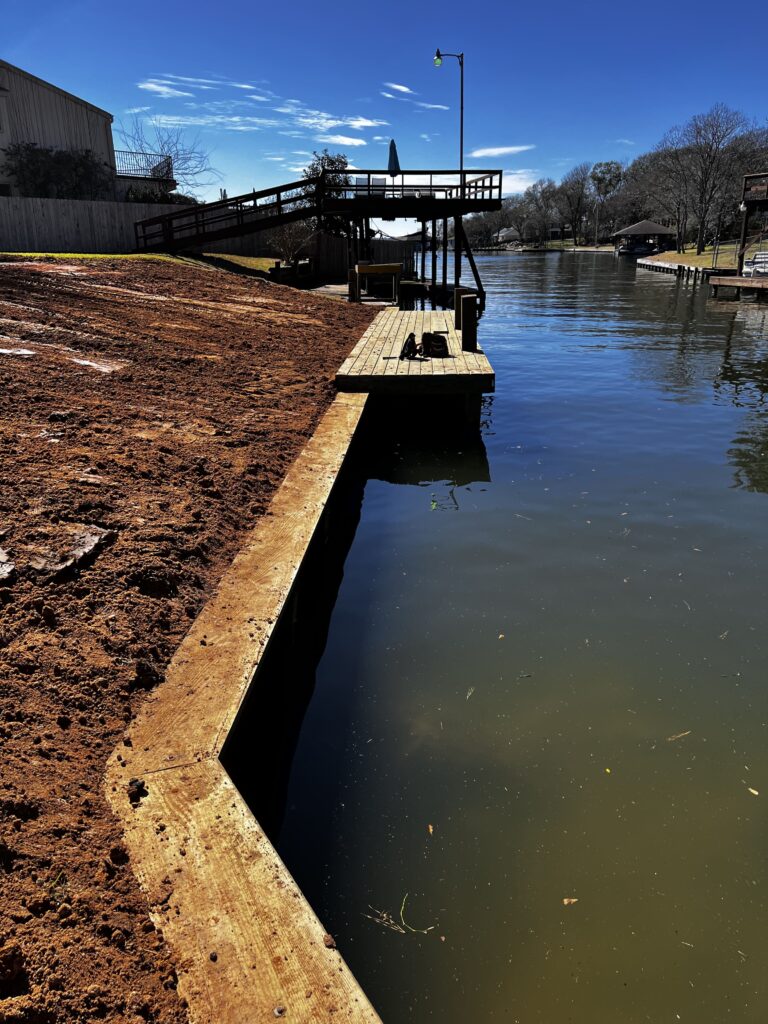
Water never waits. Once a bulkhead starts failing, the shoreline slowly follows. Small cracks turn into bigger problems. Soil slips. The wall weakens. Acting early makes the repair easier and protects your waterfront before the damage spreads.
Good repairs come down to control. Block the water. Stabilize the shoreline. Fix the structure the right way. Done properly, a strong bulkhead protects your property for years and keeps your lakefront safe and usable.
If your shoreline needs attention, the team at Dream Boat Docks is ready to help.
FAQ
Can existing bulkheads be reinforced instead of replaced?
Sometimes, yes. If the wall still has solid structure, contractors can reinforce it instead of ripping everything out. Think new tiebacks, stronger anchors, replacement panels, better drainage. Small fixes can add years to the life of the wall. But if it’s leaning hard or sections are collapsing, replacement is usually the smarter move.
How often should bulkheads be inspected?
At least once a year. Quick walk. Simple check. Look for leaning panels, gaps, soil slipping behind the wall, or rusted hardware. After heavy storms or a season of constant boat traffic, check again. Bulkheads rarely fail overnight. They show warning signs first if you’re paying attention.
What causes bulkheads to fail prematurely?
Water pressure. Bad drainage. Aging materials. Loose anchors. It adds up. Waves keep hitting the same spot, soil slowly washes out, and the wall loses support from behind. Sometimes the original installation wasn’t done right either. Once that structure weakens, the lake keeps pushing until something finally gives.
How much does it cost to replace a waterfront bulkhead?
It depends. Length of the wall. Materials. Water depth. Soil conditions. Access to the shoreline. Small replacements stay manageable, but larger shoreline rebuilds can climb fast. Permits and equipment can also affect the final number. The best move is getting a contractor out to look at it before guessing on price.